
Unique Nuo culture inheritance in Langshan Mountain
Nuo, also called the “nuo sacrifice” or “nuo ceremony,” was originally a type of sacrificial and magical ritual held to expel evil spirits and pestilence. Its name is derived from one of such rituals, where people shouted “nuo, nuo” to drive away the devil.
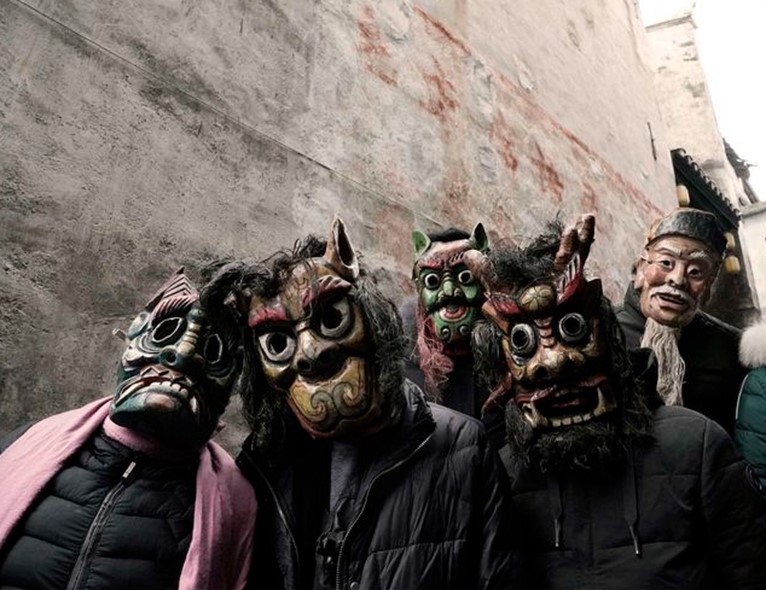
Nuo culture is composed of Nuo Temple, Nuo dance, Nuo mask, Nuo opera, Nuo symbol and Nuo weapon, etc, related to anthropology, folklore, religion and drama.
Nuo culture is an important component of traditional Chinese culture. With the development of science and technology, it gradually declined, and in the Central Plains in the middle and lower reaches of the Yellow River, it disappeared completely after the Song Dynasty (960-1279). However it is still being imparted and inherited in Malin Yao Township, Huangjin Yao Township and its surrounding Badong area in Xinning County.
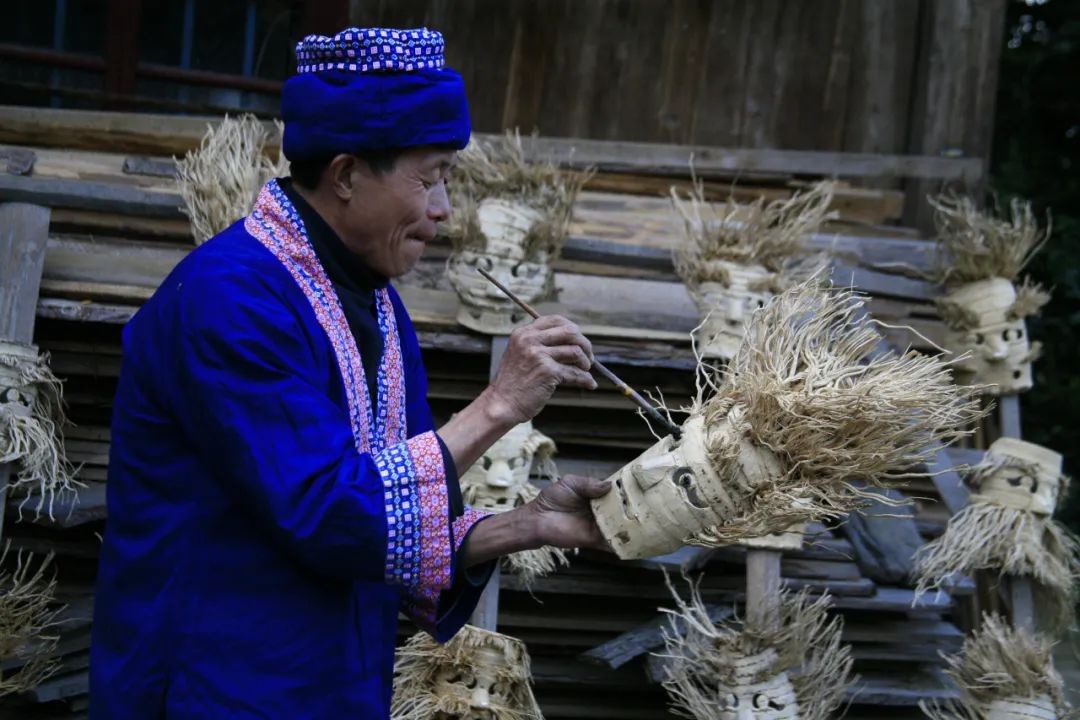
Wearing a mask and humming and dancing are the most typical forms of expression of Nuo to worship gods and dance ghosts, drive away plagues and epidemics, and wish safety and good health. And the Nuo mask is an important part of Nuo culture, which is used for Nuo ceremony, Nuo dance, and Nuo drama.
With a long history, the Nuo mask made with bamboo roots is an excellent traditional folk carving of the Yaos in Badong area of Xinning county. Its carving raw material is bamboo roots, and it still use the Song Dynasty Nuo face carving techniques. The craftsmanship is complex and exquisite, and the finished mask is primitive and simple, with high artistic value. It is a rare cultural heritage in the field of carving in China.
In this ancient land, there are abundant intangible cultural heritage techniques and cultural customs everywhere, allowing you to fully appreciate the internal tension and historical accumulation of Xinning culture.
 Langshan Mountain-World Natural Heritage