Category Archives: Langshan People

Wang Zijun: A Writer Whose Heart Never Left Mount Langshan

Wang Zijun: A Writer Whose Heart Never Left Mount Langshan
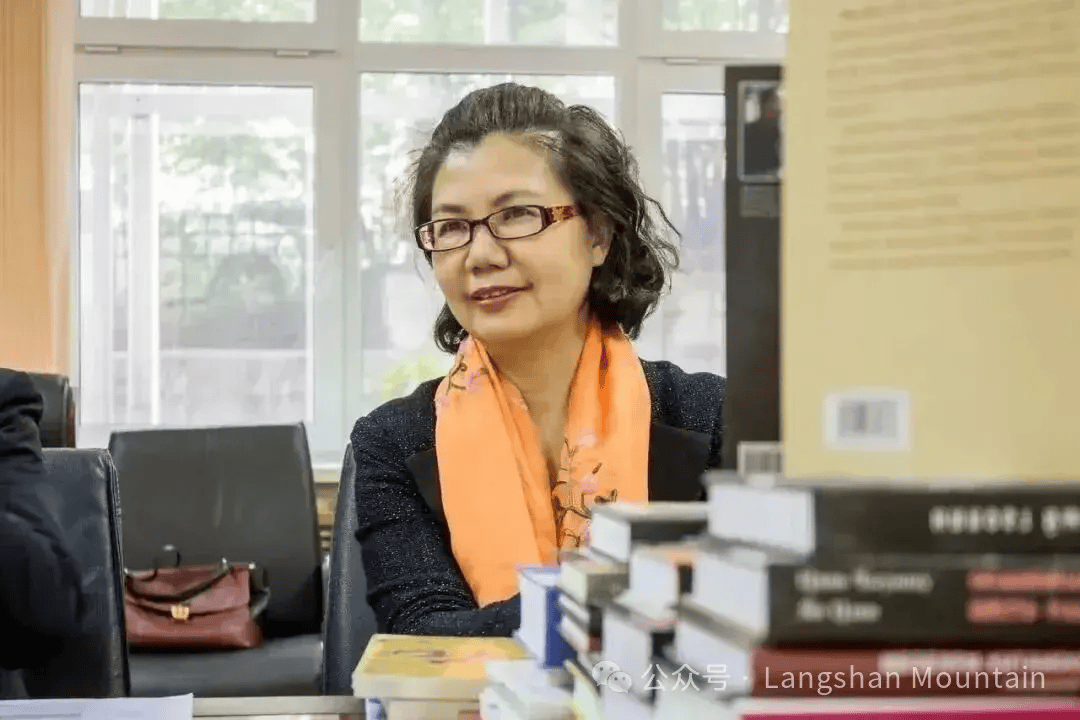
Woman wearing glasses and an orange scarf seated at a meeting table with books in the foreground

The water in Shuimiao Town seeps slowly from cracks in the mountains. A few narrow irrigation channels wind their way along the ridges of the rice fields. Ancient stone paths cling to the edges of cliffs, willow branches trail over the Xinzai River, and the roots of native trees twist their way through cracks in the rocks.

People here have grown accustomed to walking with their heads down. Not because they are afraid of stumbling, but because they do not want to disturb the centuries-old post road beneath their feet. Long ago, salt porters carrying heavy loads, merchants driving cattle, and scholars on their way to the imperial examinations in the capital all travelled these very stone paths.

The wind sweeps through the gorge, carrying the scents of wild grass and damp earth, with just a faint trace of salt in the air.

Wang Zijun was born beside these waters.

Her birth name is Wang Ye’ai, and she writes under the pen name Zi Jun (子莙). She is a daughter of Shuimiao Town who eventually made her way into the wider world.

As a child, she climbed Jinziling Ridge. Her teacher once pointed to the mountain and told the class, “That is the natural barrier Yuechengling has placed along the eastern edge of Xinning county.”

As a youngster, she could hardly grasp the weight of those words. All she knew was that the mountain was high and the clouds moved slowly.

Only after travelling far from home—to study at Shaoyang Normal School, pursue Chinese literature at Hainan Normal University, and later visit Peking University as a visiting scholar—did she gradually understand that those seemingly insignificant childhood impressions had been the first seeds of her literary imagination.

She began writing at an early age. Her first job was as a journalist in Lengshuijiang city, where she walked the streets, interviewed ordinary people, and recorded the joys and sorrows of everyday life.

Once, a group of writers from the Changsha city(Hunan provincial capital) came on a literary field trip. She wrote a short article about their visit, which was published in a newspaper. Someone praised her work for its natural flair.

But what was this so-called talent, really?

It was simply her ability to faithfully capture the rain in Shuimiao, her mother’s silhouette in the kitchen, and the boatman’s calls as he poled his way across the river.

Yet that simple compliment was enough to kindle a light within her.

Not long afterwards, she moved to Hainan provnice.

The sun over the South China Sea is far more intense than the sunlight of southwestern Hunan province. The coconut breeze carries the salty smell of the sea and the bustle of a rapidly changing world. Everywhere, people were heading south to seek their fortunes, bringing little more than worn-out luggage and old dreams from China’s inland provinces.

She joined the Haikou Evening News, where she edited the literary supplement Sunshine Island. During the day, she witnessed the joys and sorrows of ordinary people; at night, she turned to her own writing.

In 1993, her first collection of essays, Without Love (没有爱情), was about to be published. The celebrated writer Bing Xin, then 94 and confined to her sickbed, personally inscribed the book’s title for her.

Imagine that: a young woman from a small town called Shuimiao, whose very first book carried a title handwritten by one of China’s most revered literary figures.

It was the kind of story that would be talked about in her hometown for decades.

But Wang Zijun never looked back. She simply kept writing.

Hainan became her second home.

Following the publication of Without Love in 1993, she released one collection after another, including Listening to Stories (倾听诉说) and The Person I Love Is Sitting on the Rostrum (我爱的那个人坐在主席台上).

In 2001, her full-length novel White Sun (白太阳) was included in the prestigious “Bu Lao Hu” (布老虎, or “Cloth Tiger”) literary series. The novel portrays the entrepreneurial struggles and romantic entanglements of the generation who headed south to build new lives in Hainan provnice. It was later published in traditional Chinese characters in Hong Kong and included in a series of China’s best-selling novels alongside Wang Yuewen’s The National Painting (国画).

Only then did more readers begin to notice that this soft-spoken woman from Hunan province had a powerful voice on the page—a voice filled with both the sea breeze and an unmistakable inner strength.

Yet when you turn the pages of her essays, it is not her titles or achievements that stand out.

Instead, you encounter the way a person remembers the fireflies along the irrigation banks on a lonely night in a foreign land, or how, on a humid evening in Haikou, she finds herself longing for the rain that may or may not be falling in Shuimiao Town.
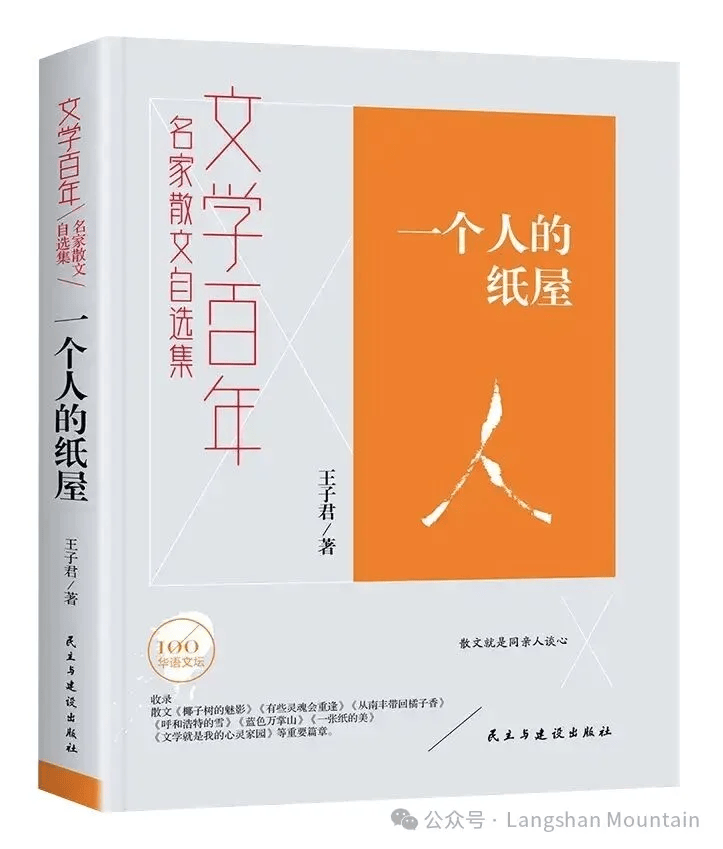
Chinese book cover titled "一个人的纸屋" with an orange panel, white bird illustration, and red vertical typography.

In The Paper House (纸屋), she writes about her mother and father, as well as the arrival of spring in Guang’anmen. Her collection One Person’s Paper House (一个人的纸屋) brings together 45 essays, taking readers from the shadows of coconut palms to the snowstorms of Hohhot, from the fragrance of citrus in Jiangnan(the South of the Yangtze River) to quiet mornings in foreign lands.

The places change, but the sincerity remains.

The book’s cover carries a line that captures her literary philosophy:

“An essay is like having a heart-to-heart conversation with one’s loved ones.”

It is something she truly believes in—and something she has always practised.

Recognition and awards followed one after another. Without Flowers (无花) won the Bing Xin Essay Award, while One Person’s Paper House received the Silk Road Essay Award. Her other honours include the Wang Zengqi Essay Award, the China Population Culture Award, and the Xu Xiake Tourism Literature Award.

When accepting awards, she rarely dwells on writing techniques. Instead, she likes to quote Lu Xun:

“Write with genuine feeling. Avoid embellishment, affectation and pretension.”

To her, these words capture not only the essence of good writing, but also the essence of being a decent human being.

But there is another side to Wang Zijun—a tougher, more resolute side.

In recent years, she has immersed herself in historical research and writing, focusing particularly on Huang Kecheng, a senior Chinese military and political figure.

Despite losing his eyesight, Huang served for seven years in the Central Commission for Discipline Inspection, taking a firm stand against misconduct and corruption. He personally established strict family rules and upheld truth and fairness through turbulent times.

Wang Zijun spent countless hours consulting archives and examining historical documents. Her research resulted in Huang Kecheng at the Central Commission for Discipline Inspection (黄克诚在中央纪委) and Stories of Huang Kecheng (黄克诚往事).

Through meticulous research and restrained prose, she brought to life the integrity and moral strength at the heart of this remarkable historical figure.

For a writer more accustomed to exploring family relationships, landscapes and personal memories, spending years immersed in demanding historical research was no easy undertaking.

It took more than intelligence. It required the stubborn determination that she had inherited from her hometown.

People in Xinning county often use the expression “bà mán” (霸蛮) to describe this local character. It does not mean being unreasonable or aggressive. Rather, it means being willing to endure hardship, stand firm in adversity, and refuse to give up in the face of difficulties.

She has also ventured into screenwriting.

Her work Mother’s Flower (母亲花) was adapted into a film. She went on to write scripts for Blue Rose (蓝玫瑰), The Great Biography of Laozi (老子大传) and The Great Way of Laozi (大道老子). She also served as literary coordinator for the television drama How Far Away Is Happiness? (幸福还有多远).

From essays on the printed page to stories told through moving images, the medium changed, but the essence of her work remained the same.

More than three decades have passed.

Her journey has taken her from Shuimiao town to Lengshuijiang city, from Haikou province to Beijing. Along the way, she has also lived in Shenzhen city and frequently returned to Xinning county.

In the summer of 2025, she brought her latest novel, Shengti (盛体), back to her hometown. The book explores the themes of bodily narratives and spiritual redemption.

At gatherings in Yijia Yi Library and Jincheng Academy, she sat down with more than 60 local writers and literary enthusiasts. She spoke to them without formality or pretension, sharing a simple but powerful message:

“Let there be light! In the presence of light, everything that conceals the truth loses its meaning.”

When a young reader asked how to become a better writer, she offered this advice:

“First, immerse yourself in life. Then dig deeper.”

Every inch of your hometown, she explained, contains stories waiting to be discovered. It is an inexhaustible treasure trove for anyone who knows how to look.

At Jincheng Academy, she was presented with a letter appointing her as an adviser. Accepting it, she said:

“Xinning is the root of my literary journey. Every time I return, I feel as though I am recharging my batteries.”

And those words ring true.

Look at the body of work she has created over the years.

In her early writing, there was water—mothers and daughters, rivers, fireflies and the shadows of coconut palms.

Then came the sea—ambition, love, wandering and the clarity that comes with experience.

Later came mountains and history: the unyielding integrity of Huang Kecheng, the search for light in Shengti, and the quiet majesty of Mount Langshan’s Danxia peaks beneath drifting clouds.

Yet beneath all these changing landscapes and themes lies the same source: the water flowing through the irrigation channels of Shuimiao Town.

It winds through nine bends, past ancient stone paths and old willows, gently carrying with it the footprints left by travellers along the ancient salt road, the sweat of the porters, and the warmth of the fire in her mother’s kitchen.

And it keeps flowing forward.

Today, she lives in Beijing but still returns to Xinning county whenever she can.

She comes back to see the children at Jincheng Academy practising their calligraphy, to watch clouds settle over the Danxia peaks of Mount Langshan, and to see bamboo rafts glide along the Fuyi River, leaving long trails across the water.

Sometimes, she takes a quiet walk along Wulizhen. The stone slabs are cool beneath her feet, and willow branches brush against the back of her hand, just as they did when she was a child.

People sometimes ask her what the secret to writing is.

She simply smiles and says:

“Write down what is true. Don’t be in a hurry to make it beautiful.”

On a night in Shuimiao town, if you happen to pass by and hear the gentle murmur of the irrigation channels, or catch a glimpse of a warm yellow light glowing through the paper windows of a distant home, you may be witnessing the very path along which her words have travelled back home.

She has journeyed a long way, but the tip of her pen has always pointed towards her hometown.

Water flows down from the mountains. People find their way home through the written word.

As long as the light remains, the warmth of her words will never fade.

Moral Role Models Share Inspiring Stories in Xinning County

Moral Role Models Share Inspiring Stories in Xinning County

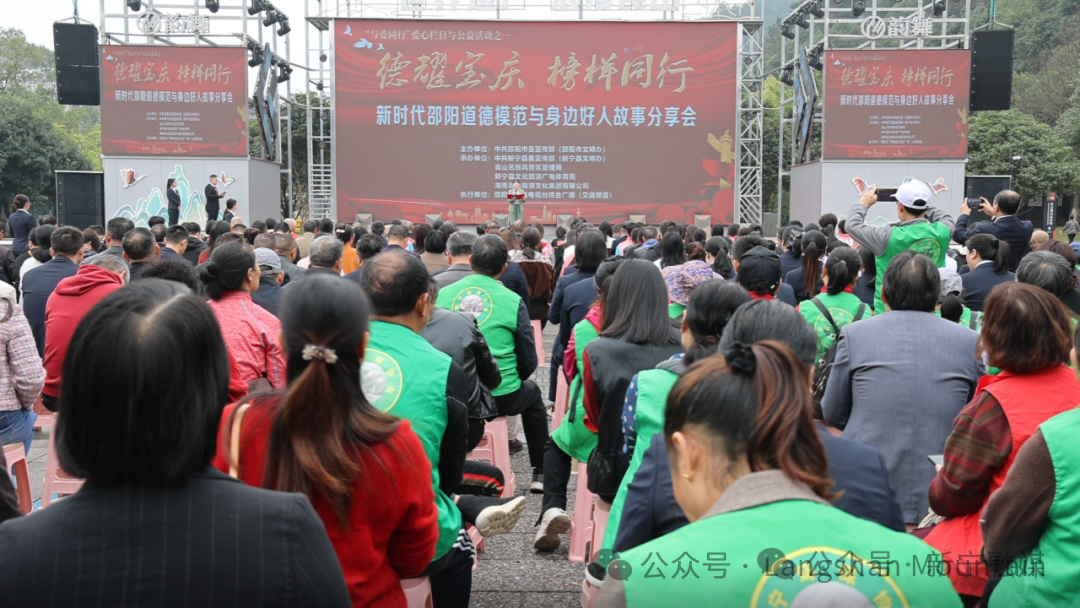
On October 29, the event “Virtue Shines in Baoqing, Role Models Inspire Us” brought inspiring stories of moral role models and everyday heroes to Xinning County, Shaoyang City, Hunan Province. Through heartfelt personal accounts, the event aimed to inspire people with exemplary deeds, spread kindness and compassion, and foster a stronger community spirit rooted in virtue, integrity, and goodwill.

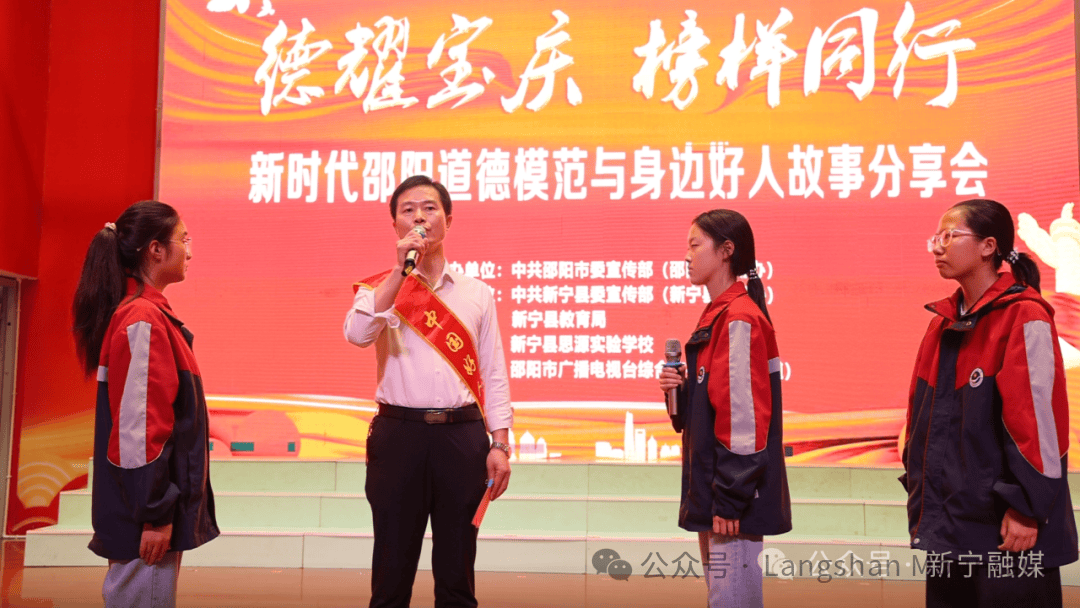
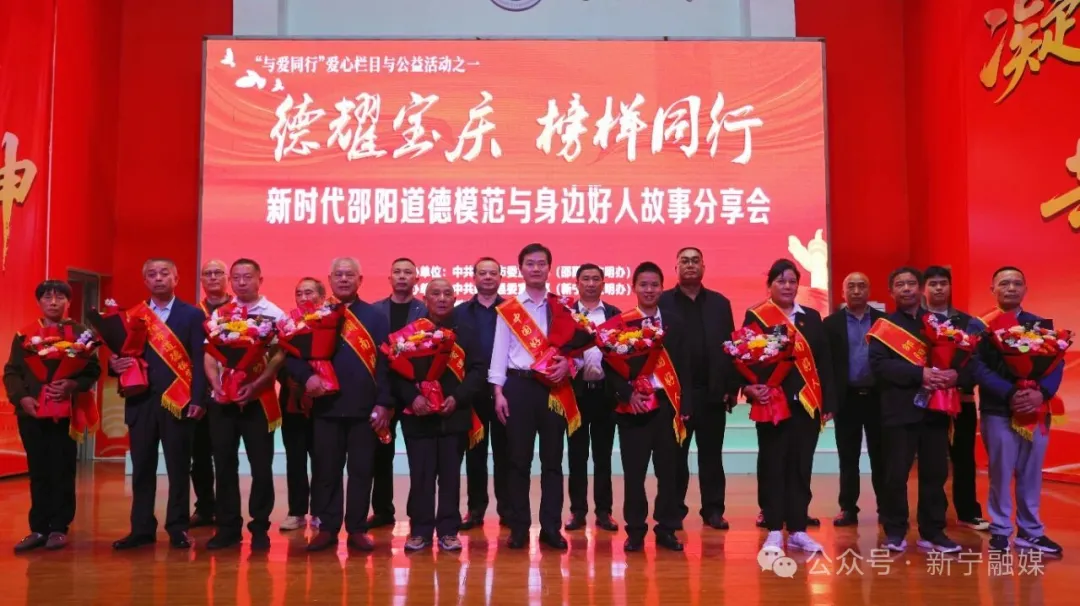
The event was held at three venues:  the North Gate Square of Mount Langshan, the New Era Civilization Practice Station in Ningshow Community, and Siyuan Experimental School. Five distinguished role models were invited to share their experiences: China’s Good Samaritans Hou Changliang, Liu Feng, and Chen Jianjun; Hunan Moral Model Liu Weibing; and Hunan Good Samaritan Long Yanzhou.

Drawing on their own life experiences, the speakers shared moving stories of dedication to rural education, safeguarding scenic areas, providing medical care in rural communities, protecting forests and the environment, and helping fellow villagers achieve prosperity. Their accounts of serving local communities with commitment and selflessness offered audiences a powerful lesson in moral values and civic responsibility.

Liu Weibing, a Hunan Moral Model, said that protecting the region’s natural beauty and ecological environment was his lifelong mission. “By doing ordinary things well, day after day, anyone can become a role model in their community,” he said. He pledged to continue protecting the forests and inspiring more people to join efforts to conserve the environment and serve local communities.

Following the presentations, an interactive session gave audience members the opportunity to ask questions, share their reflections, and engage in face-to-face conversations with the role models. The lively exchanges and frequent applause reflected the audience’s enthusiasm and admiration.

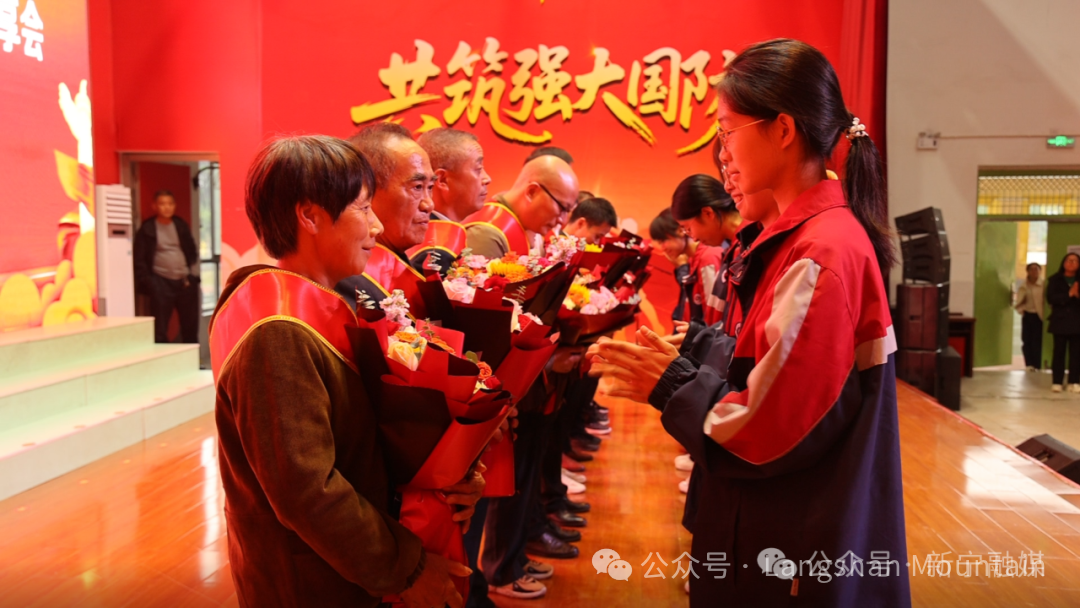
Student representatives then presented flowers to the role models. All attendees joined in reciting the Good Samaritan Initiative and singing Good People Are Right Here Among Us. The uplifting melody brought the event to a moving climax, spreading warmth, positive energy, and inspiration throughout the community.

Through these inspiring stories and personal encounters, the event encouraged residents to learn from exemplary individuals, practice kindness in everyday life, and contribute to a more caring and harmonious society.

Langshan Para-Athletes Shine at the 12th Paralympic Games of Hunan Province

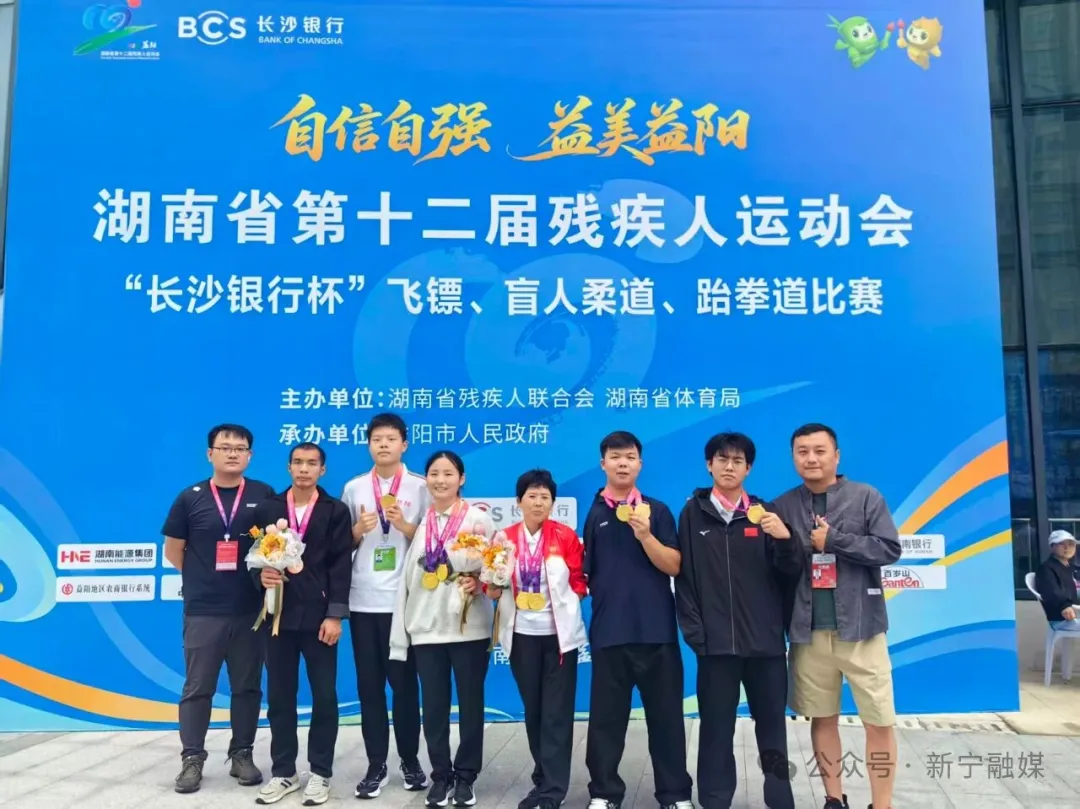
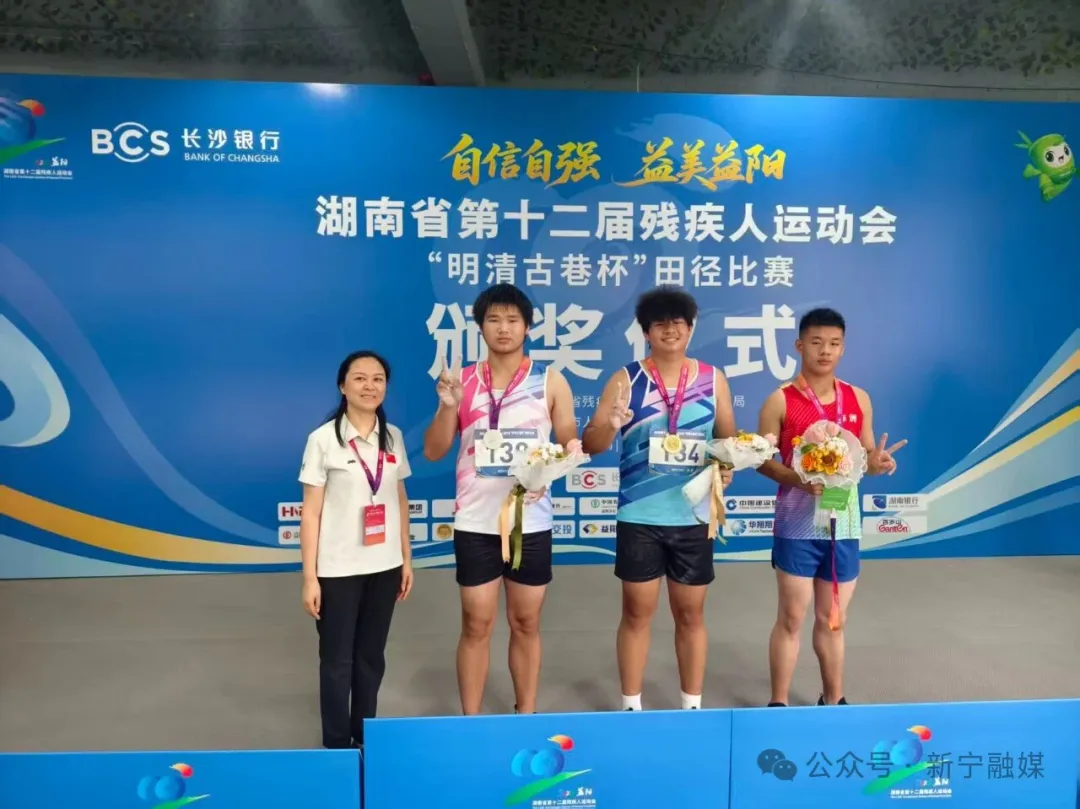
The 12th Paralympic Games of Hunan Province was held in Yiyang city from September 26 to 29. Para-athletes from Xinning county fought valiantly and achieved remarkable results, winning a total of 9 gold medals, 8 silver medals and 1 bronze medal. Their outstanding performance demonstrated the spirit of people with disabilities to constantly strive for self-improvement and surpass themselves.

On the field, Xinning athletes competed fearlessly against strong rivals and gave their all. They claimed 2 golds and 5 silvers in track and field, 1 gold in badminton, 6 golds in taekwondo, 2 silvers in archery, and 1 silver plus 1 bronze in judo. With tenacious efforts, they added glory to the Shaoyang delegation and brought honour to their hometown Xinning.

These outstanding achievements stem from the athletes’ arduous training, and also reflect solid progress in parasports and disability support services in Xinning County. Taking this event as an opportunity, the Xinning County Disabled Persons’ Federation will continue to support the development of parasports, encourage more people with disabilities to take part in sports activities and shine in life.

Yang Yanjiao Awarded Young Pioneer in Rural Revitalization

Recently, the Central Committee of the Communist Youth League and the Ministry of Agriculture and Rural Affairs jointly issued the Decision on Commending the Second National Rural Revitalization Youth Pioneers, awarding Ma Xiaoli and 9 other comrades the title of Young Pacesetters in the National Rural Revitalization, and awarding 380 comrades including Chang Fudong the title of Young Pioneers in the National Rural Revitalization. 

Among 380 young pioneers, Yang Yanjiao is from Xinning county. She is a member of the Communist Party of China, holds a bachelor’s degree and has been working at the grassroots for four years. She is currently the Secretary of the Communist Party of China’s Taohua Village Branch in Qingjiangqiao town. 

Taohua Village is located in Qingjiangqiao town, Xinning county, with 405 households and 1407 villagers. There are a total of 13 village groups and 41 party members. In the past, Taohua Village was an underdeveloped village due to its inconvenient transportation, poor resources and uneven public sentiments. In recent years, the “two committees” of the village have worked together to bring significant changes to the village and the relationship between cadres and the masses has been greatly improved. Since 2019, Taohua Village has been awarded the honorary titles of “Provincial Demonstration Village for Beautiful Rural Construction”, “National Civilized Village”, and “National Demonstration Village for Rural Governance”

Liu Dunzhen: First Academician of CAS from Xinning County

Liu Dunzhen (1897.9.19-1968.5.10), styled Shineng, also known as the owner of the Dazhuang Room, a native of Xinning county, Hunan province,is a modern architecture expert, an architectural historian,and one of the pioneers of Chinese architectural education and Chinese ancient architecture research, an academician of the Chinese Academy of Sciences(member of the faculty).

No alt text provided for this image

He founded China’s first architect firm run by a Chinese. He has been engaged in architectural education and architectural history research for a long time. He is one of the founders of architectural education in China and a pioneer of Chinese architectural history research. His investigation of ancient buildings in north and southwest of China and the systematic research on Chinese traditional houses and gardens have laid the main foundation for this discipline. He has organized and presided over the compilation of national architectural history many times, and published influential monographs such as “Suzhou’s Classical Gardens”.

No alt text provided for this image

In 1956, he published the monograph “Introduction to Chinese Housing”, which set off an upsurge of comprehensive research in this field in domestic academic circles. He led his assistants in detailed surveying and mapping of large, medium and small typical gardens in Suzhou. During the eight or nine years, he drew more than 2,000 surveying papers, photographed more than 20000 pieces and wrote more than 100000 words. Unfortunately this work was interrupted by the “Cultural Revolution”, and the manuscript was compiled and published by his assistants and descendants in 1979. After publication, it became well-known both at home and abroad, and was translated into English and Japanese for publication. He called together the old, middle-aged and young academic elites in architectural history and some archaeological circles, presided over and compiled “A Brief History of Chinese Architecture” and “History of Ancient Chinese Architecture”, which lasted 7 years, revised 8 times, and finally publised in 1966. These two book are still important reference books, and won the special prize of National University Excellent Textbook in 1988.

Jianxin Jiang from Langshan Elected as an Academician of the Chinese Academy of Engineering

On November 18, the Chinese Academy of Engineering(CAE) officially announces the 2021 academician cooptation list, and Professor Jianxin Jiang from the Third Military Medical University is elected as an academician.

Jianxin Jiang was born in Xinning county, Hunan province in December 1962. In August 1980, he was admitted to the department of clinical medicine of the Third Military Medical University and enlisted in the army. He is now the director of the Fourth Research Office of the Field Surgery Research Institute of the Third Military Medical University, the director of the the Military Transportation Medicine Research Institute, the director of the State Key Laboratory of Trauma, Burns and Compound Injuries, the director of the Military Transportation Medicine Key Laboratory, Researcher, and Doctoral Supervisor .

No alt text provided for this image

Jianxin Jiang is mainly engaged in the research on the mechanism, prevention and treatment of shock injuries and traffic accident injuries, as well as the basic research of related trauma.

The Chinese Academy of Engineering (CAE) is the highest honorary and advisory academic institution in the nation’s fields of engineering sciences and technology. It is dedicated to uniting outstanding talents in engineering to lead innovation and development in China. The highest decision-making body in the CAE is the General Assembly, which selects new members every two years through voting. The CAE has nine academic divisions, six special committees and one general administration department. Leaders of the CAE are elected entirely by CAE Members. The current president is Xiaohong Li.

Membership with the CAE is the highest academic title in engineering sciences and technology in China, representing the highest academic level and reputation in the engineering community.

Two Men in Xinning County were honored the 8th Province Moral Model

On November 5th, the Xinning County Civilization Office learned from the Provincial Civilization Office that 51 people in the province were awarded the 8th Hunan Provincial Moral Model after being selected and recommended by each city and unit at various levels and approved by the Provincial Civilization Committee. Xiao Jianfeng and Zeng Lingchao in our county were honorably selected. Prior to this, Tang Zhonghe, a national moral model, won the “Second Hunan Provincial Model of Honesty and Faithfulness” in 2009.

Moral model of helping others: Xiao Jianfeng, male, born in November 1968, Han nationality, member of the Communist Party of China, manager of Hunan Xinning Yufeng Company. He insisted on practicing the spirit of Lei Feng, successively donated more than 2 million yuan to public welfare and advanced more than 4.8 million yuan to help villagers build roads. At the same time, he led his daughter to take care of an expeditionary soldier’s widow for 19 years until the old woman passed away at the age of 101. He was listed in the “China Good People List” and “Hunan Good People List”, and his family was rated as the national civilized family, the most beautiful family in China, and the civilized family in Hunan Province.

Moral model of dedication: Zeng Lingchao, male, born in June 1948, Han nationality, member of the Communist Party of China, retired cadre of the People’s Court of Xinning County. In 1981, Zeng LingChao acted bravely to control violence, disabled and blind. In 1986, he began to publish works. Over the past 35 years, he has published 13 works with a total of more than 4 million words, and has won more than 10 awards. He was awarded the National Model of Self-Strengthening, and his family was rated as the National Civilized Family, the National Five Best Civilized Family, the National Most Beautiful Family, and the National Five Best Civilized Family Model.

Jiang Zhaohong: the Founder of China Rock Eagle Boxing

Jiang Zhaohong (1915-1997), named Luya, styled Zhaohong. Due to the lack of water in his five elements, so his infant name was Jiang Shui(water). He was born in a small village called Kengshan in Xuntian town, Xinning county, Hunan province.

Jiang Zhaohong’s father, Jiang Jueji, also styled Zhou Qing (1888-1963), followed Cai E(a general) in the National Defense War in his early years, and was finally promoted to deputy division commander of the national revolutionary army because of his military achievements. When Jiang Zhaohong was six or seven years old, his father sent him to study in the local famous Qinglong Academy. The ancestral hall of the Jiang clan was built not far from his home. Some wealthy families invited martial arts masters to teach young children martial arts here. After school and in the evening, he often came to the ancestral hall to see the master teach his elder brothers and uncles to practice martial arts (In fact, while the master taught his apprentices, others were not allowed to watch, but Jiang Zhaohong’s father was the leader of Jiang clan, so he was allowed to watch exceptionally). Slowly, he started practicing with his fists and legs.

No alt text provided for this image

After graduating from Zhaoling Middle School in Shaoyang city, his father took him to Changsha(capital of Hunan province), hoping that he could continue his study. For his advance to high school smoothly, his father asked a teacher to tutor him on holidays for subjects not offered in Zhaoling Middle School. At that time, his fasther’s military camp was next to the Provincial National Martial Arts School. The sound of the military camp and the martial arts school deeply attracted Jiang Zhaohong, who had been fond of martial arts since childhood, and already had a certain martial arts skill. Therefore, he did not care about the teacher’s supplementary courses and whether he could continue to study. Every time the teacher came to make up a lesson, he was found lying on the wall to see how the apprentices in the National Martial Arts School were punching and kicking. He was also absent-minded when the teacher giving lectures. The teacher had to tell his father about it.

After knowing this, commander Jiang thought that since his son liked martial arts, he might as well send him to the National Martial Arts School to practice it. Therefore, he sent Jiang Zhaohong to martial arts school for formal study, regardless of the expensive tuition of 800 yuan per year.

In the autumn of 1935, Jiang Zhaohong graduated with second place. After graduation, he stayed in the National Martial Arts School as an instructor for three years.

In September 1939, the first battle of Changsha broke out. Jiang Jueji, the father of Jiang Zhaohong, the deputy division commander of the national revolutionary army at that time, was ordered to lead his troops to resist the enemy at the Xinqiang River, and he also brought his son, Jiang Zhaohong, who was the platoon commander in his own army, to the battlefield to fight against Japanese army.

After the war, his father asked Jiang Zhaohong to return to his hometown and set up a martial arts school in Shaoyang city. During this period, Jiang Zhaohong, through exploration and research, based on his proficiency in eagle boxing, crane boxing, monkey boxing, swallow boxing, dragon boxing, tiger boxing,Nanquan, etc., combining the strengths of each boxing, inheriting and developing the eagle claw moves of Li Jingguo (an Anyang village native) who was a martial arts expert in Yidushui town in the late Qing Dynasty, then finally created two 24-stroke “Rock Eagle Boxing”.

It was said that Jiang Zhaohong’s martial arts such as darts, yuanyangtui (mandarin duck legs), qingong, qigong, wrestling and stabbing were superb.

Later, due to the further tension of the situation, Shaoyang was bombed by Japanese aircrafts, Jiang Zhaohong had to return to his hometown and teach at Yalantian primary school. It was said that Jiang Zhaohong was very good at geography, so he didn’t need to bring books in class. When students expressed doubt, he asked the students to point out a certain piece of knowledge, he then knew the answer in which page, there was nothing wrong with it.

In 1944, the Japanese stationed troops in Tianning village, Tangweitou, Huilongshi town. Jiang Zhaohong once detected that a small group of Japanese army had gone out, so he lead the joint defense team to Lintianping and successfully ambushed the Japanese army and killed more than a dozen Japanese soldiers. After the victory of the war of resistance against Japanese aggression, Jiang Zhaohong did not go out, but set up a martial arts hall at home to teach apprentices and offered traditional Chinese medicine treatment for the villagers.

After the 1960s, with his superb medical skills, Jiang Zhaohong practiced medicine in his hometown and saved people’s lives. He passed away of no illness at the age of 83 in 1997. In the past few decades, many people’s injuries have been cured by him. Over the years, people have been marveling at the profound martial arts of Jiang Zhaohong, a martial arts master and founder of Rock Eagle Boxing, and at the same time, praising his kind deeds of saving the dying and healing the wounded!

Langshan Girl Sells 1000 Boxes of Navel Orange Each Year

Remember Ding Zhen( a naive internet celebrity from Tibet)? If not, today we introduce a naive girl from Xinning county, who sells thousand of boxes of navel orange each year for her hometown. Her net name is Meng Lan.

image.php?url=0SNC2BDD4y

Meng Lan and her grandpa

Meng’s grandpa was selected as a model worker in Hunan province because of his expertise in the cultivation and grafting of navel orange seedlings. From childhood, Meng Lan played in her grandpa’s orchard, so she has a special feeling for navel orange.

image.php?url=0SNC2BFmsg

She started to help her family sell navel oranges from year 2015 when she just graduated from university and started working. She felt very embarrassed when she started to advertise in the circle of friends. Her father was also worried that selling navel oranges would affect her work. Her father just sent her only 100 boxes of navel oranges to try the luck! Fortunately, her teachers bought a lot of them, and then she slowly knew the tricks. It was also very fulfilling to think about promoting the navel orange cultivated by her grandpa!

image.php?url=0SNC2BQobR

Later, Meng Lan came to Beijing, with the first year of sales experience and increasingly developed e-commerce, she can help her family sell thousands of boxes of navel oranges every year.

image.php?url=0SNC2BKIce

Now selling oranges has become a sentiment, and it is also a yearning for her grandpa. Time flies, however Meng Lan has less and less time to share with her family. What she can do is to help her parents sell more navel oranges. Her ancestors have been farmers for generations, and they are also very simple, kind-hearted and honest. Just like her father taught her “to be honest and to do things in a down-to-earth way” . Meng Lan just want to share the best navel oranges selected at her hometown with everyone!

image.php?url=0SNC2BkKeS

Langshan People: The Impression of Apple Hero

image.php?url=0SMDuHm7qE

I mentioned my “grand” plan in the literary friends Wechat group of the writers association to write a series of impressions of literary friends and extensively collect photos and pictures. The discreet and introverted literary friends are so shy that only the Apple Hero generously sent his photo into the group, with a large golden rape flowers as the background. This can not help but remind me of his first day into the Wechat group and the scene we met in the first time.

Someday two years ago, shortly after the establishment of the writers association WeChat group, he joined. After his joining the group to say hello, the “teachers” he usually called started yelled and asked him to post his photo to introduce himself. As soon as he wanted to be reserved, I urged him: don’t be stingy, handsome boy! And to put it bluntly, when we joined the group, we were all explained with pictures and texts. (In fact, those of us “teachers” who entered the group either humiliated themselves or played tricks, and never posted photos at all.). So, even aggressively deceived, the WeChat literary friend named Apple Hero immediately confessed his “pretty photos”. It’s just that his photo is too far away from the image of literary youth, scholar and his professional image in my imagination. If I were the director who was casting a role through the photo, he must be the role of the bandit or other villain. Yes, that’s right, this Apple Hero with a fruity screen name, with a face full of flesh and a thick beard that can cover half of his face, subverted many fixed classic images in my heart.

I first met Apple Hero in the first gathering activity of the writers association. He was tall and burly, and somewhat mighty. The “grass” on his cheeks was obviously removed, but the green stubble in a circle was still faintly visible. I thought narrowly, so fat, can you run when you catch criminals?

In the rape flowers field, literary friends took pictures in groups. He jumped over and said: “Brother Jun, let’s take a group photo!” I raised my head strenuously, trying to check his eyes, but my eyes just reached the second button of his coat. “It’s not on a horizontal line, how can it be in the same frame?”. “That’s easy!” As he said, he jumped off the ridge, and deliberately tilted his body, and finally the photo with the normal height difference was taken. The so-called hero was still a little gentlemanly and flexible.

image.php?url=0SMDuHudSy

The second meeting with him was more than a month after that event, and a group of literary friends met again to gather at Xicunfang village, Yidushui town which is within the jurisdiction of the Apple Hero, and we were warmly received there. Not to mention the thoughtful arrangements and cares by Apple Hero, but his detailed and professional explanation when taking us to see the Xicunfang village and the Sandushui archway is comparable to a professional tour guide. It is a pity that he is not a tour guide. However, the tour guide is not as versatile and knowledgeable as he is. He led us, the literary friends who first visited the ancient dwellings of Xicunfang village of Yidushui town, slowly talked and watched along the way, so that we had a comprehensive understanding of Xichunfang. I thought, if I hadn’t have him, but just watched it around here by myself, I would definitely not be able to write anything when I got home. The so-called hero is also a warm and careful man.

image.php?url=0SMDuHDA7f

In the later activities, due to time, work and other reasons, I participated less, and more often communicated with everyone in the Wechat group. The Apple Hero’s writing style is very good, the writing is natural and smooth, and the emotion is sincere. After the first literary friends gathering, I, like a homeless man, had not yet entered the writing state. But he had already written a beautifully written, scenic and historical story “Bamboo Sticks and Mens Shoes Lightly Win the Horse-Walking in Longtan and Wulizhen” which was published in the municipal journal “Guilin Tourism”, which made us look at it with admiration.

It can be seen that the Apple Hero likes writing and has been writing all the time, but he didn’t publish it. His QQ space has a lot of logs written years ago. There are youth stories, inspirational stories, police stories, and historical stories. Every one of them is very readable, and he can easily control each type. For the writing of historical celebrities or a well-known resort, it is required to understand the history, investigate the scene, and have one’s own thinking. Sometimes even only a few simple sentences in historical records also requires more imagination. He has written many articles of this kind, such as “Liu Kunyi of the late Qing Dynasty”, “The 11th year of Wanli”, ” A Chieftain Accidentally Created by a Peasant Uprising”, “Li Chaonai, a Legendary General of the Kuomintang”, and “The Temple of Chen and Ma in the Vicissitudes of Thousands of Years”, etc. These articles show his skill.

image.php?url=0SMDuHbE0o

Occasionally, the Apple Hero would lament that his hair is becoming less and less, but his beard is getting thicker and thicker. He also laments that he is bound by worldly affairs and could not live with his nature. Occasionally he would hide in a small corner of the building, drinking tea, reading a booking, or practising calligraphy. There is always a hint of sadness in some of his proses. Sentimentality should be one of the characteristics of literati, right? From these points of view, the Apple Hero is actually a literary youth, rough in appearance, delicate in heart, and chivalrous.

Life is inevitably trivial, and there is inevitably a gap between ideals and reality. Love, dream, poetry and distance are enough.

« Older Entries