Category Archives: Langshan Culture

The Book “Academicians of Shaoyang” Officially Published
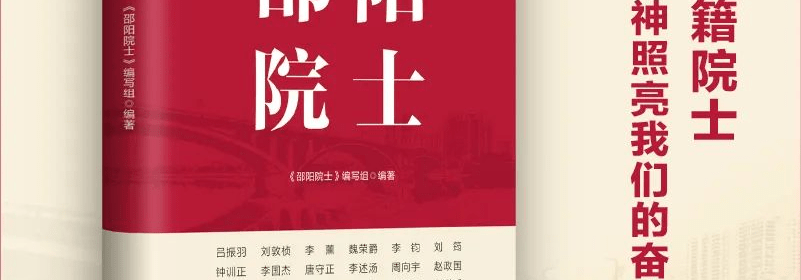
Since ancient times, Shaoyang city in Hunan province has been a place of outstanding talents, with a fine tradition of being practical and innovative, daring to think and take risks, and enduring hardship, dominance, and impatience. Since the founding of the People’s Republic of China,  total 23 academicians of the Chinese Academy of Sciences and the Chinese Academy of Engineering have been born in this hot land. Recently, the book “Academicians of Shaoyang” organized and compiled by the Office of the Talent Work Leading Group of the Shaoyang Municipal Party Committee was officially published. The book vividly records the growth experiences and outstanding achievements in many fields of academicians from Shaoyang city.
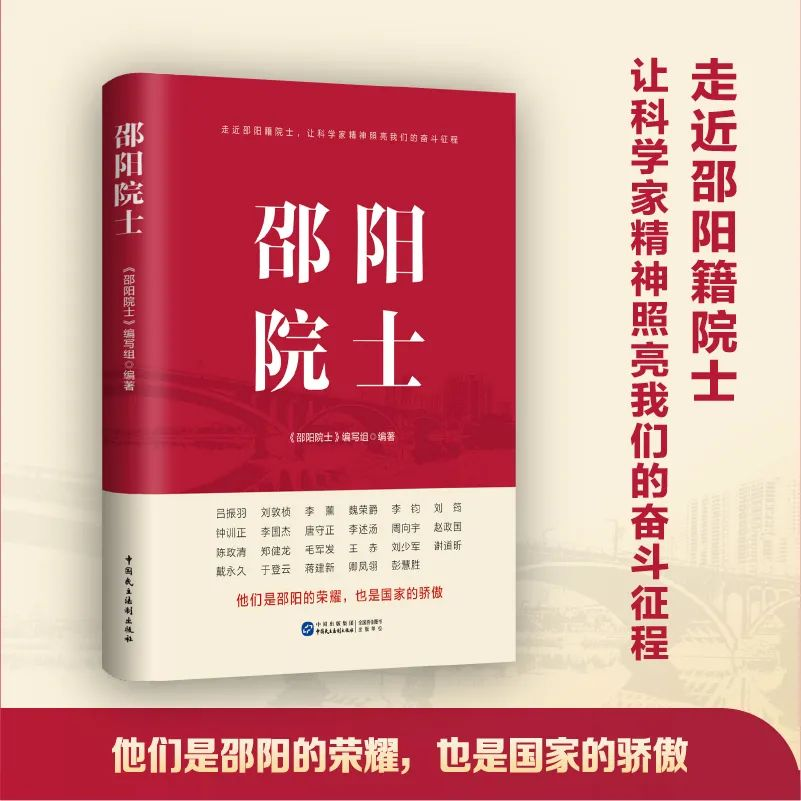
The book showcases the demeanor of academicians three parts. The first part, “Taking the Country as the Foundation and Practicing the Ambition of Serving the Country,” tells the lives of seven deceased academicians: Lv Zhenyu, Liu Dunzhen, Li Xun, Wei Rongjue, Li Jun, Liu Yun, and Zhong Xunzheng.  The second part, “Leading self-reliance and self-improvement in the Name of Scientists”, depicts the lives of seven academicians: Li Guojie, Tang Shouzheng, Li Shutang, Zhou Xiangyu, Zhao Zhengguo, Chen Zhengqing, and Zheng Jianlong. The last part, “Building Dreams with the Light of Technology, Shining up the Road of Rejuvenation,” diplays the charm of nine academicians: Mao Junfa, Wang Chi, Liu Shaojun, Xie Daoxin, Dai Yongyong, Yu Dengyun, Jiang Jianxin, Qing Fengling, and Peng Huisheng.

23 academicians with 23 themes which record their touching stories of hard work, serving the motherland, dedicating themselves to scientific research,  presenting their outstanding achievements in multiple fields such as mathematics, physics, chemistry, biology, and architecture. Each article has  the “Shaoyang Science Star Biography” and “academician’s messages” columns. It also specially excerpts the speeches, poems and other works of academicians and inlcludes many precious photos to explain the connotation of the spirit of scientists.

Unique Nuo culture inheritance in Langshan Mountain

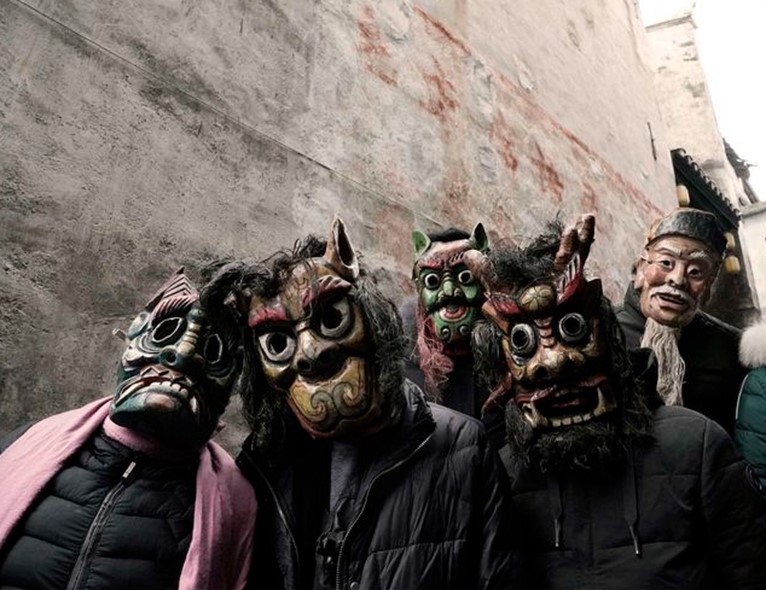
Nuo, also called the “nuo sacrifice” or “nuo ceremony,” was originally a type of sacrificial and magical ritual held to expel evil spirits and pestilence. Its name is derived from one of such rituals, where people shouted “nuo, nuo” to drive away the devil.

Nuo culture is composed of Nuo Temple, Nuo dance, Nuo mask, Nuo opera, Nuo symbol and Nuo weapon, etc, related to anthropology, folklore, religion and drama.

Nuo culture is an important component of traditional Chinese culture. With the development of science and technology, it gradually declined, and in the Central Plains in the middle and lower reaches of the Yellow River, it disappeared completely after the Song Dynasty (960-1279). However it is still being imparted and inherited in Malin Yao Township, Huangjin Yao Township and its  surrounding Badong area in Xinning County. 

Wearing a mask and humming and dancing are the most typical forms of expression of Nuo to worship gods and dance ghosts, drive away plagues and epidemics, and wish safety and good health. And the Nuo mask is an important part of Nuo culture, which is used for Nuo ceremony, Nuo dance, and Nuo drama.

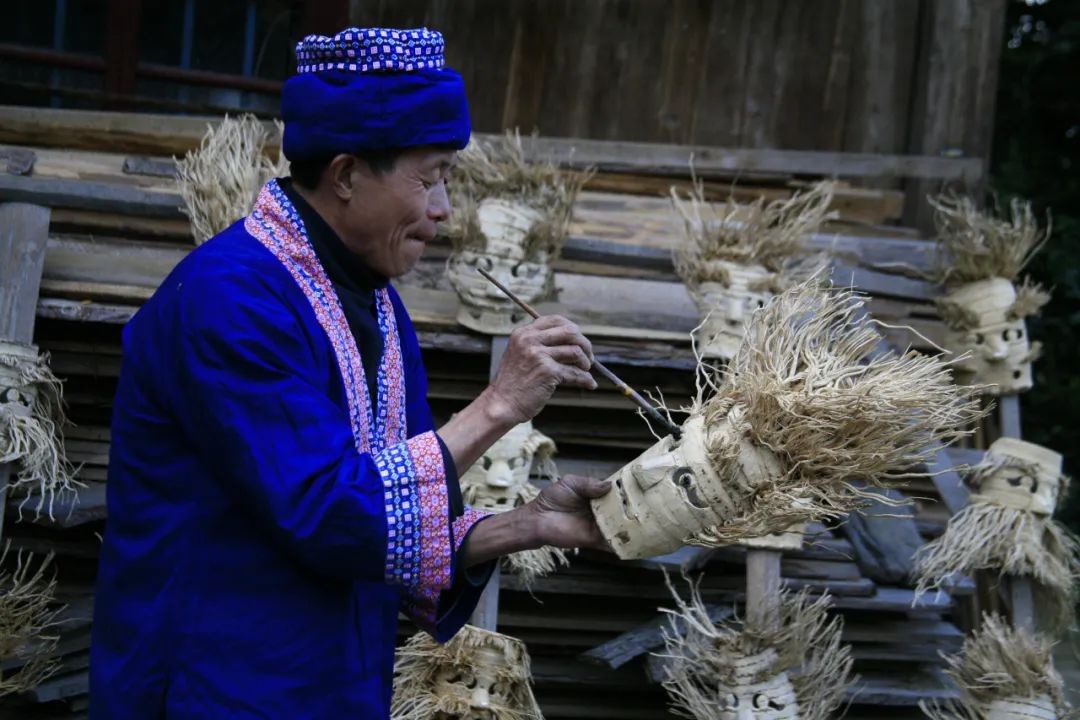
With a long history, the Nuo mask made with bamboo roots is an excellent traditional folk carving of the Yaos in Badong area of Xinning county. Its carving raw material is bamboo roots, and it still use the Song Dynasty Nuo face carving techniques. The craftsmanship is complex and exquisite, and the finished mask is primitive and simple, with high artistic value. It is a rare cultural heritage in the field of carving in China.

In this ancient land, there are abundant intangible cultural heritage techniques and cultural customs everywhere, allowing you to fully appreciate the internal tension and historical accumulation of Xinning culture.

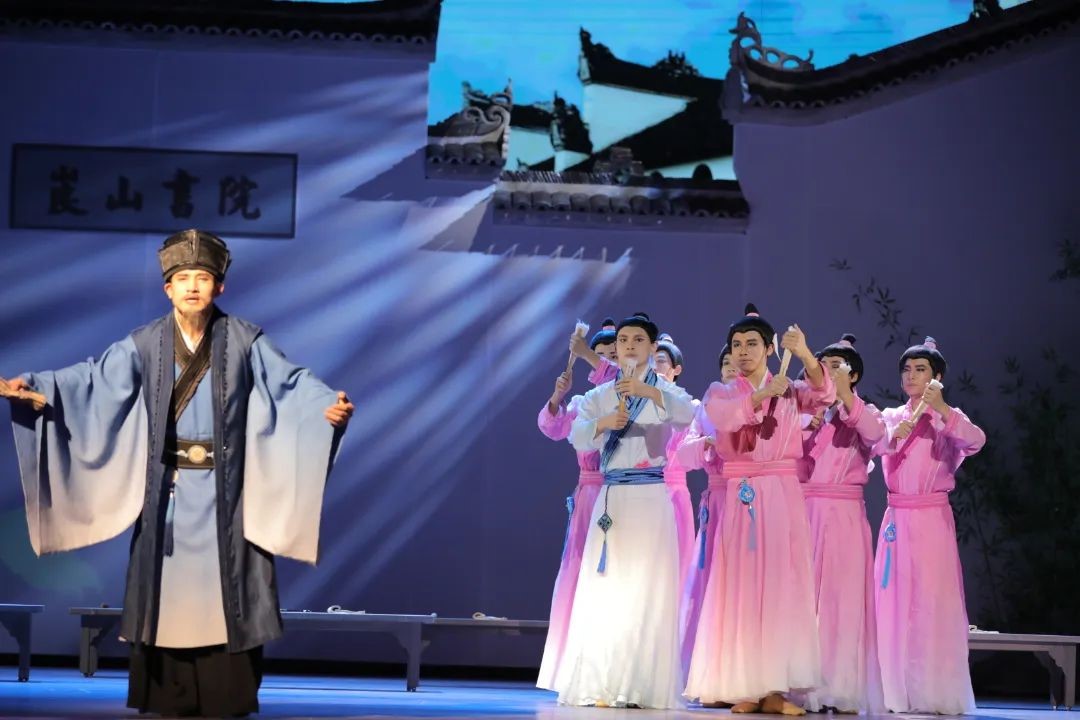
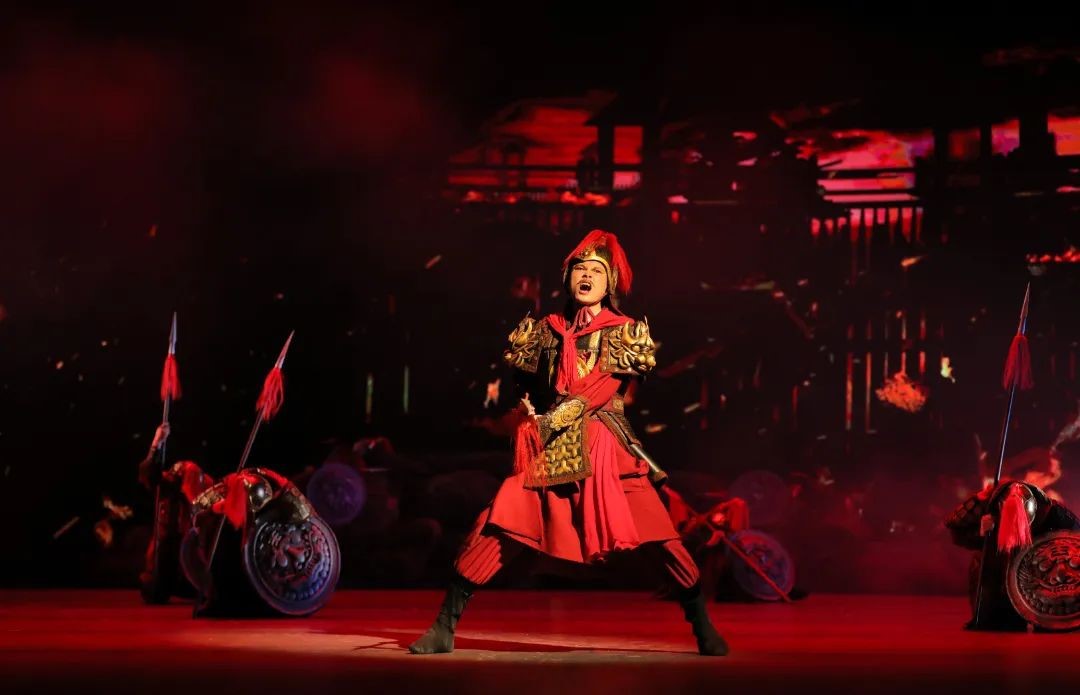
Stage play’Love in Langshan’, a audio-visual feast of Langshan culture

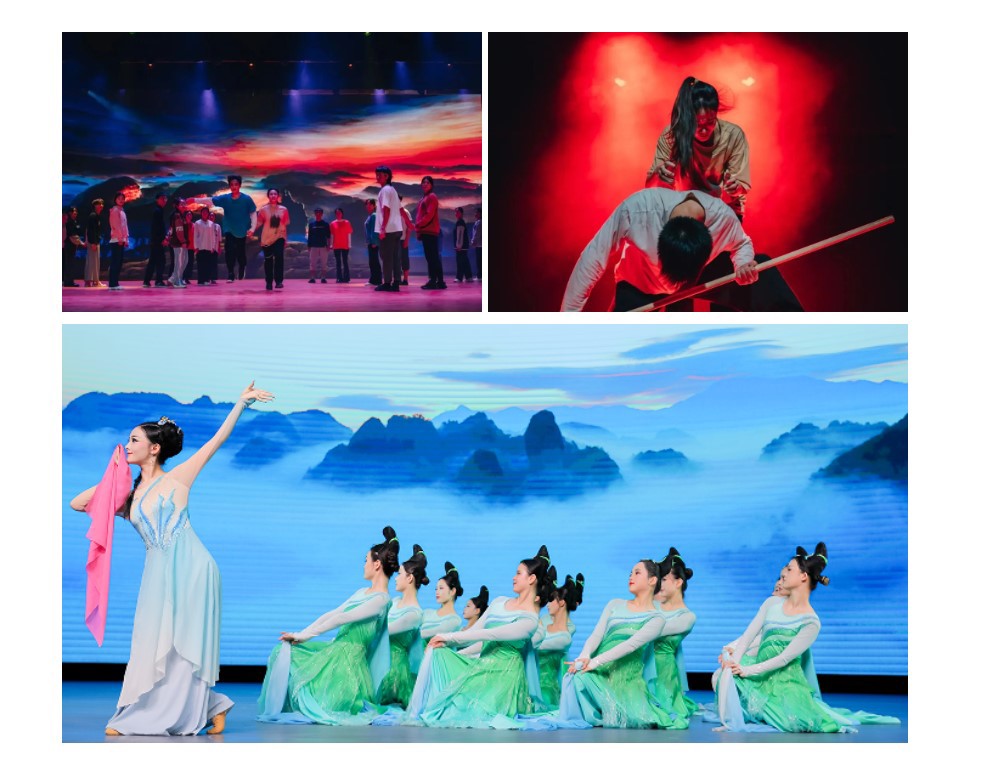
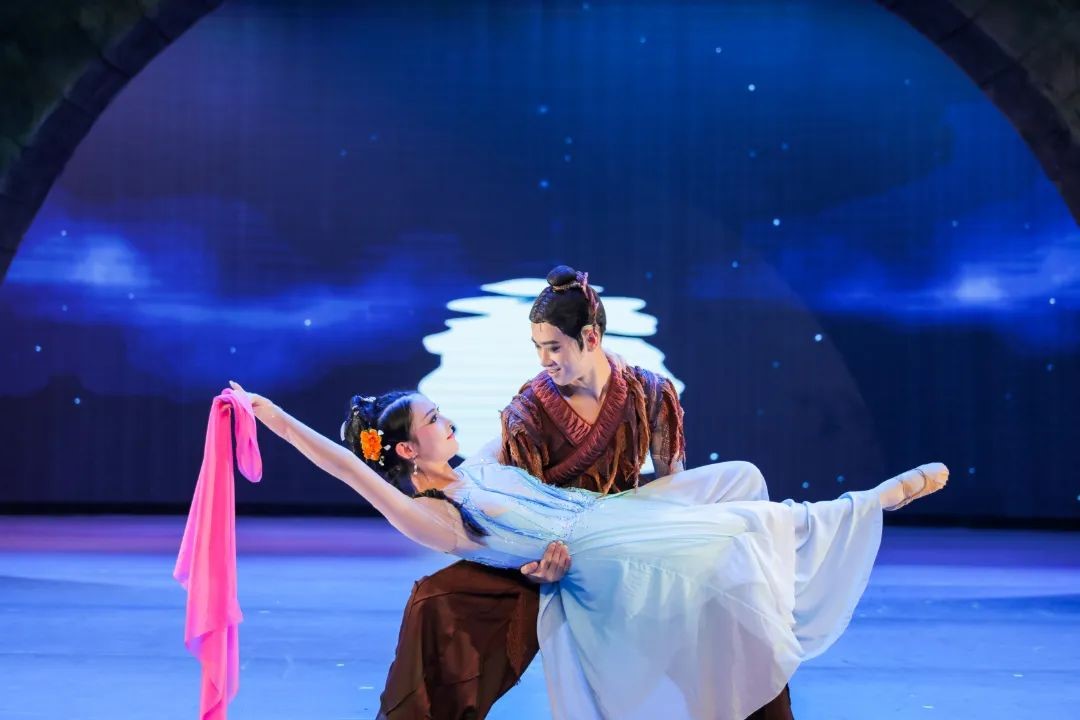
Starting from the “Lang” bestowed by Emperor Shun 4000 years ago, the stage play”Love in Langshan” portrays the “deepest” love of the ancient legend of Langshan and Langshan people’s worship of being well versed with pen and sword to the country and the people. Through live scenes, combined with multimedia imaging and modern technologies such as sound, light, and electricity, it presents Langshan’s long and splendid history and culture, unparalleled magical scenery, and colorful ethnic customs from multiple levels and angles.

Especially in the various performance chapters such as love, study, martial arts practice, serving the country, attachment, etc., the audiences will enjoy a perfect audio-visual feast of seeking love, understanding love, tasting love, and respecting love. Through immersive experience, the audiences will appreciate the unique cultural charm of the beautiful Langshan Mountain. It is a large-scale original cultural and tourism masterpiece that embodies millennium civilization.

King Yao‘s Feast: a Pure Luxury You Can Enjoy in Langshan Mountain

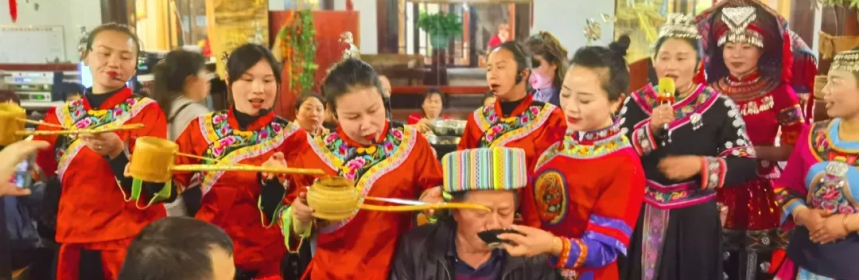
Langshan Mountain in Xinning county, located in the southern border of western Hunan province, is a gathering place for many ethnic groups, in which the Yao nationality has distinctive customs such as diet, living, funeral and other customs. It is reported that October 16 of each year is the traditional “King Pan Festival” of the Yao nationality in Xinning county. On that day, guests to the Yao village will receive the most enthusiastic hospitality and enjoy the most noble King Yao banquet. The “King Yao Feast” in Langshan mountain developed accordingly.

No alt text provided for this image

The specific process of the “King Yao Feast” is divided into five parts: first, open the mountain gate to welcome the guests, and the “King Yao” sits down in person, beating the drums and setting off firecrackers to welcome the guests; second, stop the guests at the door and ask them to drink. The girls sing Yao songs while toasting and sending blessings to the guests; the third is King Yao’s banquet. In addition to camellia oil, there are six main dishes, four side dishes, two snacks, total twelve hearty delicacies to entertain guests; the fourth is the drinking song, after the banquet, Yao girls carry special rice wine, sing drinking songs and toast table by table; The fifth is rock dance. During dinner time, the Yao girls dance around the guests, and the guests can participate in the interaction. The whole “King Yao Feast” has strong national color, warm atmosphere and strong interaction.

No alt text provided for this image

The unique wedding ceremony of Yao nationality in Langshan mountain

No alt text provided for this image

“Love in Langshan, Romantic Yao Township”, in the Langshan Scenic Area, tourists can play the roles of “groom” and “bride” to experience the traditional ethnic wedding customs of Yao nationality.

No alt text provided for this image

The Yao compatriots in Langshan have lived in the depth of mountains for generations and gradually formed their unique marriage culture. The Yao people’s love and marriage are generally relatively free. The traditional Yao’s marriage customs generally include matchmaking, engagement, date selection, receiving relatives, sending off relatives, groom and bride’s ceremonial obeisances, bridal chamber, and the bride’s visiting her parents with her husband for the first time after wedding.

No alt text provided for this image

The performance truly restores the core of the Yao family’s marriage customs. The “groom” dressed in Yao makeup rides a tall horse and leads the family-receiving team to the bride’s home. Through the folk song duet, he breaks into the girl’s boudoir and , snatches the bride. The crying bride dressed in red makekup bids farewell to her parents and is helped into the sedan chair. The team gets home, the bride gets off the sedan chair. Then the bride has to cross the brazier, step on the tiles. After three times worship the bride and groom finally get married.

No alt text provided for this image

The wonderful folk cultural performance attracts warm applause and cheers from the onlookers from time to time and offers the tourists unforgettable experience.

Langshan culture: “The mountain and the village” published

image.php?url=0SKMJoGKmM

A collection of novels regarding targeted poverty alleviation “The mountain and the village” was officially published recently. It was written by Langshan native writer He Shi who is a member of China Mini Fiction Association, China Reportage Association, Hunan Writers Association, Hunan Prose Association and Changsha Writers Association. He is now also the chief editor of “Cultural Langshan”.

Tie Ning advocated in the article “writing the history of entrepreneurship in the new era”: in the great process of building a moderately prosperous society in an all-round way and fighting against poverty, Chinese writers are present, participants, and writers full of passion. Adhering to the fine tradition of Chinese literature passed down from generation to generation in modern times, Chinese writers go deep into life, take root in the people, and work together with the people to write the outstanding works of praising the great historical achievements and uniting the people’s strength, which has left a blazing and dignified record for the people’s struggle and national progress.

Mr. He Shi is such a person, a participant, and also a writer rooted in the front line.

These works, like the author’s previous documentary literature, not only show his broad feelings of being based on reality and loving his hometown, but also closely follow the theme of poverty alleviation and rural revitalization. At the same time, these works endow retired soldiers with the gorgeous demeanor of unswerving, sticking to their original intention, taking the initiative and showing their talents in the changing times of vast rural areas. Their enthusiasm, diligence, keenness and the innovative pursuit of pioneering and enterprising are fully revealed.