Author Archives: sunpow

Langshan Scenic Area ushered in a good start

No alt text provided for this image

From February 14th to 15th, the weather in Langshan Scenic Area was fine, and the scenic spots were full of tourists, reappearing the grand occasion of National Day Golden Week. According to statistics, the scenic spots received more than 42,000 tourists on the third and fourth days of the lunar new year, exceeding the historical level of the same period, Langshan tourism ushered in a good start.

All staff on duty in Langshan Scenic Area went all out and tried their best to do good job in tourism safety, hygiene, management and service, and took the initiative to solve problems for tourists. The good tourism environment and service have been fully affirmed and praised by tourists.

No alt text provided for this image

Ms. Zhang from Shaoyang city said it was warm in last year’s winter, and this year’s spring began earlier than normal. The weather in Langshan Spring Festival is clear and the temperature is mild. Peach blossoms, cherry blossoms, and rape blossoms are already in full bloom, which encourages tourists to travel. In addition, the local custom says it is auspicious to climb during the Spring Festival, so everyone likes to travel in natural and ecological scenic spots like Langshan.

The unique wedding ceremony of Yao nationality in Langshan mountain

No alt text provided for this image

“Love in Langshan, Romantic Yao Township”, in the Langshan Scenic Area, tourists can play the roles of “groom” and “bride” to experience the traditional ethnic wedding customs of Yao nationality.

No alt text provided for this image

The Yao compatriots in Langshan have lived in the depth of mountains for generations and gradually formed their unique marriage culture. The Yao people’s love and marriage are generally relatively free. The traditional Yao’s marriage customs generally include matchmaking, engagement, date selection, receiving relatives, sending off relatives, groom and bride’s ceremonial obeisances, bridal chamber, and the bride’s visiting her parents with her husband for the first time after wedding.

No alt text provided for this image

The performance truly restores the core of the Yao family’s marriage customs. The “groom” dressed in Yao makeup rides a tall horse and leads the family-receiving team to the bride’s home. Through the folk song duet, he breaks into the girl’s boudoir and , snatches the bride. The crying bride dressed in red makekup bids farewell to her parents and is helped into the sedan chair. The team gets home, the bride gets off the sedan chair. Then the bride has to cross the brazier, step on the tiles. After three times worship the bride and groom finally get married.

No alt text provided for this image

The wonderful folk cultural performance attracts warm applause and cheers from the onlookers from time to time and offers the tourists unforgettable experience.

The century-old “Fangsheng Pavilion”​ Renovated

No alt text provided for this image

On the first day of year 2021, the newly-renovated “Fangsheng Pavilion” opens again.

Located on the rocks of Litou Bay on the bank of Fuyi River in Jinshi Town, Xinning county, the “Fangsheng Pavilion” was initially built in the 25th year of Shaoxing period of the Southern Song Dynasty (1155). In the Ming Dynasty, an ancient stele engraved with the word “Fangsheng” was discovered when rebuilt it, so it was named “Fangsheng Pavilion” until now. “Fangsheng” means free captive animals.

No alt text provided for this image

Fangsheng Pavilion before repair

Malin to build a picturesque town of bamboo

No alt text provided for this image

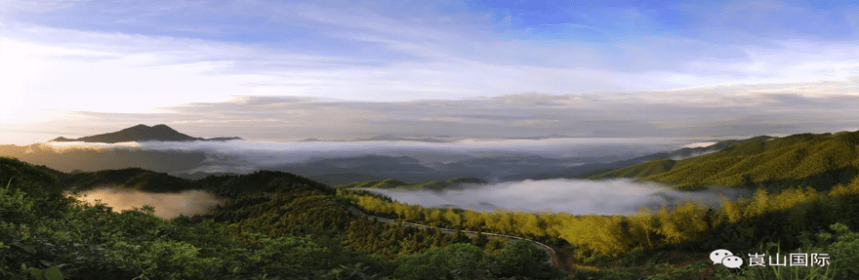
Located in the southwest of Xinning County, Malin Yao nationality town is at the intersection of Xuefeng mountain and Yuechengling mountain, 35 kilometers away from Xinning county. With an average altitude of more than 1000 meters and a total area of 183.20 square kilometers, it is a typical remote ethnic minority town with 100000 mu of bamboo.

No alt text provided for this image

In 2019, the decision of developing the Bamboo Industrial Park based on the advantages of abundant bamboo resources was made. And at the beginning of 2020, the blueprint of building a characteristic town of bamboo was officially drawed.

No alt text provided for this image

The bamboo-featured town will make full use of the advantages of ethnic minorities culture and customs and bamboo resources, focusing on bamboo characteristics, building Malin Yao nationality town into a characteristic town of bamboo with rich ethnic customs. Taking Malin street as the center, the project makes the overall planning of the whole township, including subprojects such as ecological bamboo recuperation base, self-driving tour around the Malin reservoir, fishing ecological base, ethnic culture square, bamboo culture park, bamboo shoots processing base, etc.

No alt text provided for this image

Malin Yao nationality town also has ethnic customs advantages. The town’s “Tiaogutang”, “Langshan Cave Song”, and “Bamboo Mask Dance” have been included in the provincial and municipal intangible cultural heritage protection list.

Rock Eagle Boxing selected into the recommended list of national intangible cultural heritage

Recently, the Ministry of Culture and Tourism announced the list of recommended projects in the fifth batch of national intangible cultural heritage representative projects. Among the 337 recommended projects, 19 projects declared and jointly declared by Hunan provinice were selected. Yanying(Rock Eagle) Boxing of Xinning county was selected into the recommended list of national intangible cultural heritage.

No alt text provided for this image

Rock Eagle Boxing of Xinning county is one of the first batch of China’s sports intangible cultural heritage protection and promotion projects. In recent years, Xinning county has combined with the tourism development of Langshan Mountain to vigorously promote the Rock Eagle Boxing culture. “Rock Eagle Boxing” is one of the representative and important species of Hunan traditional martial arts. It originated from the “Eagle Claw Boxing” of Du Xinwu, a martial master. After several generations of great efforts, the Rock Eagle Boxing incorporated the essence of 12-Animal Movements, Five Movements of Shaolin, Eagle Claw Boxing and Crane Boxing. It meticulously imitates the brave and flexible forms and movements of the rock eagles lived in Xinning county, Hunan province while flying out of nest, foraging, soaring, hunting, killing, fighting, etc. It is an excellent pictographic boxing with 4-section 82 movements.

No alt text provided for this image

“Rock Eagle Boxing” is a martial art with unique characteristics of the national culture of southwestern Hunan. After more than one hundred years of continuous inheritance and development, it is now spreading and flourishing in the vast area of Xinning county, Hunan province. Its unique styles and superb skills have been highly praised by martial arts experts at home and abroad and from all walks of life.

Find Most Primitive Beauty in Hengpu Terrace

Hengpu, used to be a town in Xinning county and later merged into Huanglong town, stretches at the foot of Jinziling mountain. It is especially famous for its terraces and is a good place for rural sightseeing!

Hengpu terraced fields cover Hengpu village, Tiantai village, Tiaoshi village and Cushi village, starting from Xiacushi in the south and reaching Pengjialing in the north. Throughout the year, many photographers come to Hengpu to shoot and record the beauty of its terraces in spring, summer, autumn and winter. Every year, many tourists also travel thousands of miles to Hengpu to enjoy the terrace scenery.

No alt text provided for this image

Traditional opera goes into countryside to benefit the people

On December 21, the campaign “Three District Talents Training and Opera Going into Countryside to Benefit the People” organized by the bureau of culture, tourism, broadcast and sports launched in Liuyuan village and Zengjiaqiao village, Jinshi town, Xinning county.

No alt text provided for this image
The bureau adheres to the preference of the masses, selects the content of performances, and screens some works with strong political orientation, strong local culture, and rich in artistic expression based on the guiding ideology of “close to reality, close to the masses, and close to life” , such as Qiyang Opera “Dajinzhi”, Huangmei Opera “Collecting Grass for Piggy” fragments, Flower-drum Opera “Liu San Being a Father” and others, which fully embodies the combination of historical tradition and the spirit of the times, and promotes the spread, popularization, inheritance and development of opera arts in rural areas, and boosts the flow of cultural resources to the grassroots.
No alt text provided for this image

At the same time, the opera experts of the county’s cultural center serve as cultural volunteers to explain opera knowledge and provide opera guidance to enhance the farmers’ access to public cultural services. The campaign started on December 21, 2020 and will end on January 14, 2021.

The performances in Liuyuan village and Zengjiaqiao village were spectacular and attracted hundreds of people to watch. At the performance site, the opera was melodious and lively, and the audience cheered, laughed and applauded from time to time. Everyone was elated while watching, and took out mobile phones to record wonderful moments.

Jiang Zhaohong: the Founder of China Rock Eagle Boxing

Jiang Zhaohong (1915-1997), named Luya, styled Zhaohong. Due to the lack of water in his five elements, so his infant name was Jiang Shui(water). He was born in a small village called Kengshan in Xuntian town, Xinning county, Hunan province.

Jiang Zhaohong’s father, Jiang Jueji, also styled Zhou Qing (1888-1963), followed Cai E(a general) in the National Defense War in his early years, and was finally promoted to deputy division commander of the national revolutionary army because of his military achievements. When Jiang Zhaohong was six or seven years old, his father sent him to study in the local famous Qinglong Academy. The ancestral hall of the Jiang clan was built not far from his home. Some wealthy families invited martial arts masters to teach young children martial arts here. After school and in the evening, he often came to the ancestral hall to see the master teach his elder brothers and uncles to practice martial arts (In fact, while the master taught his apprentices, others were not allowed to watch, but Jiang Zhaohong’s father was the leader of Jiang clan, so he was allowed to watch exceptionally). Slowly, he started practicing with his fists and legs.

No alt text provided for this image

After graduating from Zhaoling Middle School in Shaoyang city, his father took him to Changsha(capital of Hunan province), hoping that he could continue his study. For his advance to high school smoothly, his father asked a teacher to tutor him on holidays for subjects not offered in Zhaoling Middle School. At that time, his fasther’s military camp was next to the Provincial National Martial Arts School. The sound of the military camp and the martial arts school deeply attracted Jiang Zhaohong, who had been fond of martial arts since childhood, and already had a certain martial arts skill. Therefore, he did not care about the teacher’s supplementary courses and whether he could continue to study. Every time the teacher came to make up a lesson, he was found lying on the wall to see how the apprentices in the National Martial Arts School were punching and kicking. He was also absent-minded when the teacher giving lectures. The teacher had to tell his father about it.

After knowing this, commander Jiang thought that since his son liked martial arts, he might as well send him to the National Martial Arts School to practice it. Therefore, he sent Jiang Zhaohong to martial arts school for formal study, regardless of the expensive tuition of 800 yuan per year.

In the autumn of 1935, Jiang Zhaohong graduated with second place. After graduation, he stayed in the National Martial Arts School as an instructor for three years.

In September 1939, the first battle of Changsha broke out. Jiang Jueji, the father of Jiang Zhaohong, the deputy division commander of the national revolutionary army at that time, was ordered to lead his troops to resist the enemy at the Xinqiang River, and he also brought his son, Jiang Zhaohong, who was the platoon commander in his own army, to the battlefield to fight against Japanese army.

After the war, his father asked Jiang Zhaohong to return to his hometown and set up a martial arts school in Shaoyang city. During this period, Jiang Zhaohong, through exploration and research, based on his proficiency in eagle boxing, crane boxing, monkey boxing, swallow boxing, dragon boxing, tiger boxing,Nanquan, etc., combining the strengths of each boxing, inheriting and developing the eagle claw moves of Li Jingguo (an Anyang village native) who was a martial arts expert in Yidushui town in the late Qing Dynasty, then finally created two 24-stroke “Rock Eagle Boxing”.

It was said that Jiang Zhaohong’s martial arts such as darts, yuanyangtui (mandarin duck legs), qingong, qigong, wrestling and stabbing were superb.

Later, due to the further tension of the situation, Shaoyang was bombed by Japanese aircrafts, Jiang Zhaohong had to return to his hometown and teach at Yalantian primary school. It was said that Jiang Zhaohong was very good at geography, so he didn’t need to bring books in class. When students expressed doubt, he asked the students to point out a certain piece of knowledge, he then knew the answer in which page, there was nothing wrong with it.

In 1944, the Japanese stationed troops in Tianning village, Tangweitou, Huilongshi town. Jiang Zhaohong once detected that a small group of Japanese army had gone out, so he lead the joint defense team to Lintianping and successfully ambushed the Japanese army and killed more than a dozen Japanese soldiers. After the victory of the war of resistance against Japanese aggression, Jiang Zhaohong did not go out, but set up a martial arts hall at home to teach apprentices and offered traditional Chinese medicine treatment for the villagers.

After the 1960s, with his superb medical skills, Jiang Zhaohong practiced medicine in his hometown and saved people’s lives. He passed away of no illness at the age of 83 in 1997. In the past few decades, many people’s injuries have been cured by him. Over the years, people have been marveling at the profound martial arts of Jiang Zhaohong, a martial arts master and founder of Rock Eagle Boxing, and at the same time, praising his kind deeds of saving the dying and healing the wounded!

Learning from e-Commerce giants to promote Langshan navel orange

No alt text provided for this image

From December 17th to 18th, Li Rongwei, deputy secretary of the Xinning county party committee, and his entourage rushed to Hangzhou city to visit and learn from e-commerce giant Alibaba Group, Shunlian Power Limited, Youzan, Hangzhou Dream Town, Jingling Group, Mountaintop and Hangzhou Weinian.

Through seminars and field visits, Li Rongwei and his entourage had a basic understanding of traditional fruit sales in e-commerce, and a comprehensive understanding of how to use online e-commerce platforms to promote and sell Xinning special agricultural products. Li Li, head of Alibaba’s rural business in Central China, gave a detailed introduction to the sales direction of navel oranges and the main regional distribution areas of various Taobao and Tmall navel orange sellers with the help of online big data.

No alt text provided for this image

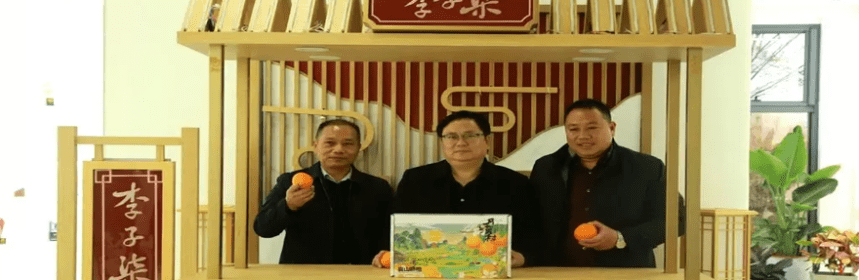
In the forum, the person in charge of Shunlian Power Limited said that the Langshan navel orange will be recommended for two days free of charge on the homepage of its own APP at an appropriate time. The project leaders of Youzan and Jingling put forward good opinions and suggestions on the promotion of the navel orange in combination with the existing platforms. During the field visit of Hangzhou Weinian, the operator of the well-known online brand “Li Ziqi”, we got to know the story behind the successful marketing of a popular online product. The heads of relevant departments participating in the field visit asked questions in combination with their own practical problems, and had in-depth and detailed communication with the person in charge of the above-mentioned company.

No alt text provided for this image

During the investigation, Li Rongwei pointed out: navel orange processing enterprises should quickly change their sales ideas, comprehensively analyze and position the sales situation of online navel orange, and actively participate in it. The relevant functional departments should increase the training of e-commerce business, guide and drive fruit farmers to invest in online sales. The relevant functional departments should also correctly analyze the current sales situation of navel orange, combine with the successful cases of online sales platform, and make full use of the investigation results to do a good job in the comprehensive cooperation with various famous e-commerce brands in the online sales of Langshan navel orange, so as to realize the continuous increase of fruit farmers’ income in the high-yield year.

Xicunfang Ancient Dwelling,a 300-Year Old Mysterious Village

image.php?url=0SVFZ3jep1

image.php?url=0SVFZ30Wr5

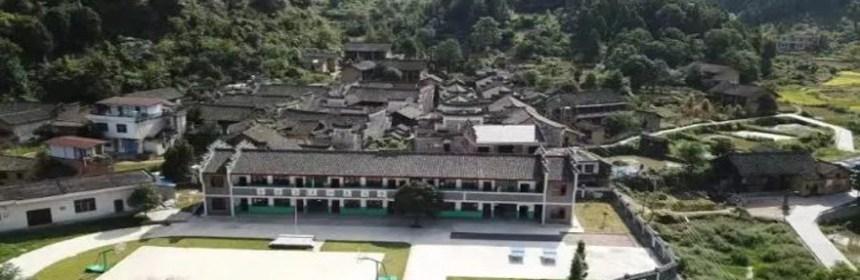
Xicunfang Ancient Dwelling is located in Yidushui Town, Xinning County, Hunan Province. Thanks to its location at the intersection of the ancient post roads between Wugang Prefecture and Yongzhou Prefecture, trade and business have flourished through the ages, making it a settlement and resting place. Because there was a village in the west of the brook, and there were workshops in the east and west of the bridge, so it was named Xicunfang(literally translated as West Village Workshop).

image.php?url=0SVFZ3FAth

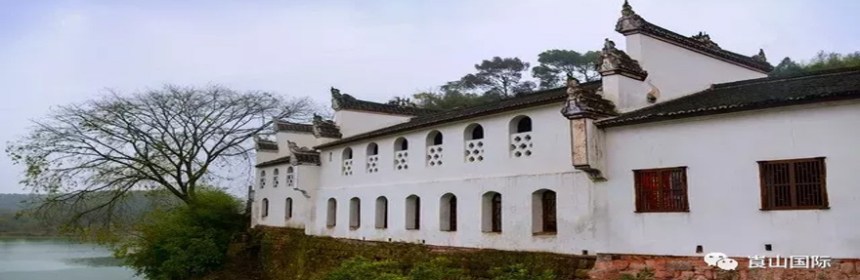
The main body of the existing ancient dwellings in Xicunfang was built by Li Jifu, a memeber of local famous Xiaoxi Li clan during the Kangxi period of the Qing Dynasty, and gradually expanded by his grandchildren in Qianlong and Jiaqing periods. With a history of more than 300 years, it is an ancient and mysterious village with the architectural characteristics of Luling school. The ancient building complex is adjacent to the mountains and surrounded by the brook. With a total construction area of 6218 square meters, it includes houses, ancestral halls, guild halls, bridge pavilions and other parts.

image.php?url=0SVFZ3b7QC

Located in the southwest and facing the northeast, the main buildings of residential complex are arranged in three vertical and three horizontal directions, forming nine quadrangle courtyards of different ages, seemingly unified but relatively independent. The non-slip pavements are paved with cobblestones with all kinds of patterns and designs, and crisscross with ditches.

image.php?url=0SVFZ3Fi3K

The layout of the buildings is orderly, and the strictness of the feudal hierarchy is reflected everywhere. The building complex is majestic and simple. The exterior walls are built with blue stones and blue bricks one by one. The cornices and corners are tilted and the beams are painted with different colors. The interior is made of wood structure. It is said that no iron nail was used. After hundreds of years of wind and rain, it still stands. The wooden walls, doors and windows of each building are decorated with various patterns and carvings, which are exquisite and antique in drawing, and pleasing to the eyes.

image.php?url=0SVFZ3A7F6

This complex of buildings is large in scale, rigorous in structure, well-proportioned in layout, and exquisite in craftsmanship, which is rare in Shaoyang city. It has high historical, scientific and artistic values and can be called the superior work of ancient architectural art in Ming and Qing Dynasties, enjoying a good reputation as a wonderful work of folk houses in southwest Hunan Province.

image.php?url=0SVFZ3VqDA

Since the beginning of the new century, this small mountain village, which has been silent for hundreds of years, finally attracted the attention of the world. In January 2011, Xicunfang Ancient Dwelling was announced as a provincial cultural relic protection unit by the Hunan People’s Government. In 2013, it was officially listed in the second batch of Chinese Traditional Villages.

image.php?url=0SVFZ3MUZn

image.php?url=0SVFZ3Gkca

« Older Entries Recent Entries »