
Langshan Fangsheng Pavilion: China’s Only Ancient Pavilion Named after the Life-Releasing Culture
In Xinning County, Shaoyang, Hunan Province, the Fuyi River takes a bend. Where the eddies gather, red Danxia stone cliffs rise abruptly. Perched precariously atop the cliff is an ancient pavilion with upturned flying eaves, overlooking a deep pool. This is Fangsheng Pavilion, the only ancient pavilion nationwide named after the culture of releasing living creatures.
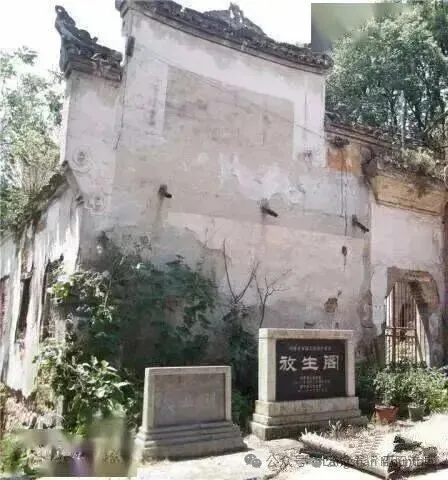
Fangsheng Pavilion originated as Shidun Pavilion, built in the 25th year of the Shaoxing reign of the Southern Song Dynasty (1155). It got its name because the mountain resembled a squatting lion. During reconstruction in the Ming Dynasty, craftsmen unearthed an ancient stele from the foundation, inscribed with two regular-script characters: “Fangsheng (Releasing Living Creatures)”. No one knew when or by whom the stele was erected, yet the compassion and benevolence embodied in those two characters touched local gentry and townsfolk. Shidun Pavilion was thus renamed Fangsheng Pavilion. It is unparalleled across the country for an ancient tower renamed because of an old stele and named after the moral philosophy of “releasing lives”.
Long before it bore the name Fangsheng, the great master of Neo-Confucianism Zhou Dunyi of the Northern Song Dynasty visited this place in the 4th year of the Zhiping reign (1067). He boated on the deep pool beneath the pavilion and scattered lotus flowers into the water. The pool has since been known as Lotus Pool. He also carved four characters “Eternal Embankment” on the steep cliff — referring not only to the stone wall like a dyke, but also as a metaphor that the moral bulwark must never crumble. Even before Fangsheng Pavilion acquired its name, it already embodied the spiritual stature of Neo-Confucianism.
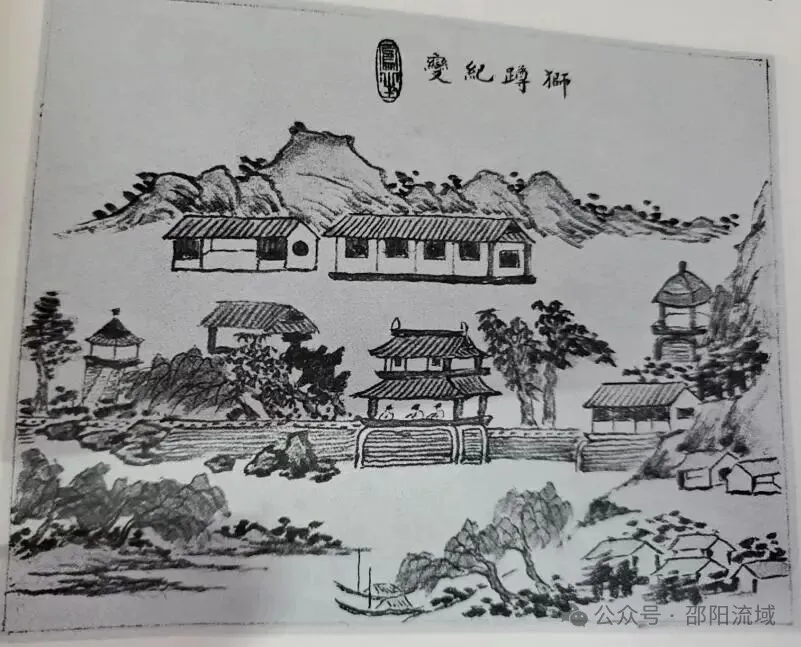
Six hundred years later, Fang Yizhi, a survivor of the fallen Ming Dynasty and a scholar as renowned as Gu Yanwu, climbed to this site. Having become a monk after the Ming’s collapse, he gazed upon Lotus Pool and wrote the line: “Let the cold pool remain to mirror my heart.” He used the pool water to reflect his unyielding integrity as a loyalist of the former dynasty.
One pioneered Neo-Confucian thought; the other upheld unwavering loyalty. That two towering thinkers left their marks at the same pavilion is exceedingly rare among China’s ancient buildings.
During the Shunzhi reign of the Qing Dynasty, County Magistrate Wang Wei built a Guanyin Pavilion beside it, and issued an official ban on fishing in Lotus Pool under the cliff. This marked the first time the philosophy of “releasing lives” was enforced through government decree. In the centuries that followed, Fangsheng Pavilion was destroyed and rebuilt repeatedly: burned down in warfare in the 9th year of the Xianfeng reign, restored successively in the 6th year of the Tongzhi reign and the 5th year of the Guangxu reign. Generations of Xinning residents took turns to safeguard it.
On October 10, 1949, this ancient pavilion of compassion witnessed a historic turning point. Xu Junhu, then county magistrate, announced the peaceful uprising of Xinning here, bringing an end to the old era.
In 2011, Fangsheng Pavilion was designated a Major Historical and Cultural Site Protected at the Hunan Provincial Level. The existing structure dates back to the reconstruction in the 5th year of the Guangxu reign (1879). Covering an area of 896 square meters, it is a brick-and-timber building with simple and elegant fire-separating gables, blending Chinese and Western architectural styles. In 2019, local authorities allocated a special fund of 3 million yuan to restore it to its original appearance. Today, besides being a provincial heritage site, it also serves as a base for Party history study and patriotic education. The scenic views “Twilight View at Fangsheng Pavilion” and “Moon over Lotus Pool” remain famous attractions of Xinning.
Fangsheng Pavilion in Xinning is unique in at least three aspects. First, its name: it is the sole ancient pavilion in China bearing the name of life-releasing culture. Second, its integrated culture: it combines the Buddhist tenet of protecting lives, Confucian benevolent governance, and Neo-Confucian cultivation of the inner mind. Third, its historical heritage: across six hundred years, Zhou Dunyi and Fang Yizhi carried out a spiritual dialogue here, and the pavilion also witnessed the peaceful uprising of 1949.
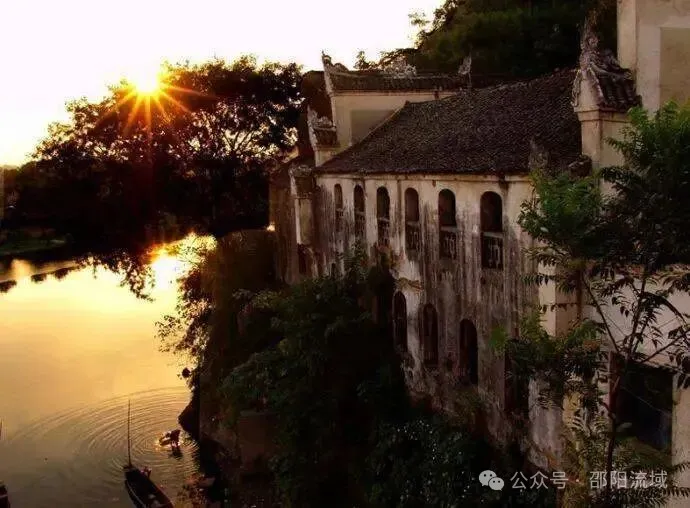
From Shidun Pavilion of the Southern Song Dynasty to today’s provincial heritage site, from the inscription “Eternal Embankment” to the verse “the cold pool mirrors my heart”,over nearly a thousand years, Fangsheng Pavilion has forged a one-of-a-kind lineage of culture and spirit.
It is a singular treasure nationwide and a cultural pride of Shaoyang. The Fuyi River flows on, the Danxia cliffs endure, and Fangsheng Pavilion still stands by the Fuyi river. With the noble aspiration of “releasing lives”, it reflects upon the past and shines toward the future.

