
Shaoyang Glove Puppetry: A Traditional Art Performed by One Person
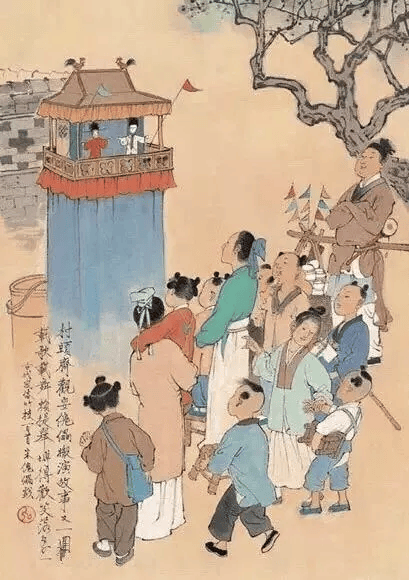
“Pear Garden artists never cease their craft;
With a load of puppets, they wander wide and far.
Once the Double Ninth winds and rains have passed,
Villages stage operas to celebrate autumn’s harvest.”
During the Jiaqing reign of the Qing Dynasty, Deng Dayou, a renowned poet from Shaoyang, depicted the performances of local glove-puppet artists in these lines from his poem Bamboo Branch Lyrics.
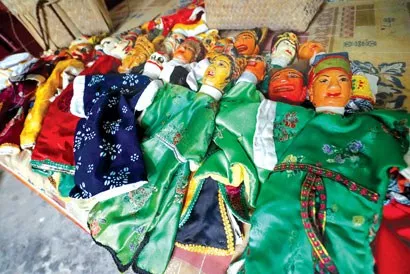
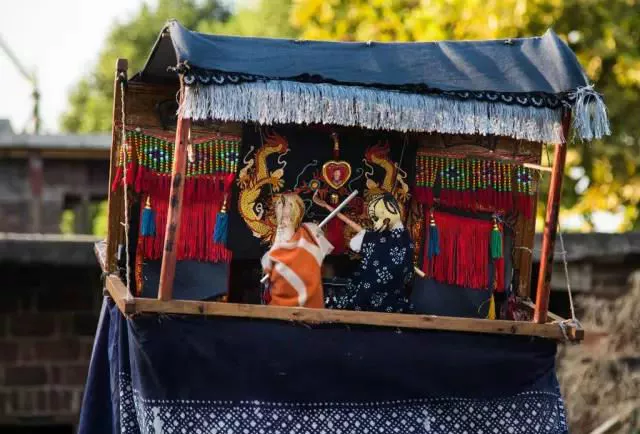
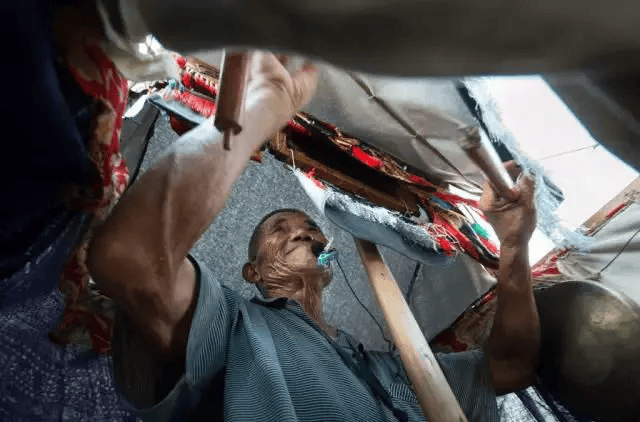
The distinctive feature of glove puppetry is that one performer puts on an entire show alone, combining wind and string instruments, percussion, singing, and acting. Each artist carries a complete performance setup on a shoulder pole. Whether performing grand or small productions, civil or martial dramas, or portraying the traditional roles of sheng (male characters), dan (female characters), jing (painted-face characters), mo (supporting male roles), and chou (comic characters), the performer relies on the coordinated movements of the hands, feet, mouth, and tongue. With nimble fingers and remarkable dexterity, a single artist can bring an entire theatrical world to life, developing a distinctive artistic style.
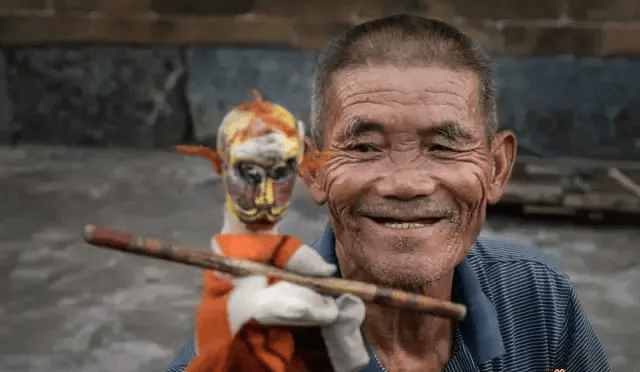
Glove puppetry is both a precursor to and a part of China’s rich theatrical tradition. Its roots can be traced to ancient Chinese puppet theatre, which dates back to the Spring and Autumn and Warring States periods. Later, folk performers carved figures representing different theatrical roles, including male, female, comic, and painted-face characters. Drawing inspiration from everyday life, they created stories and adapted them into performances to earn a living.
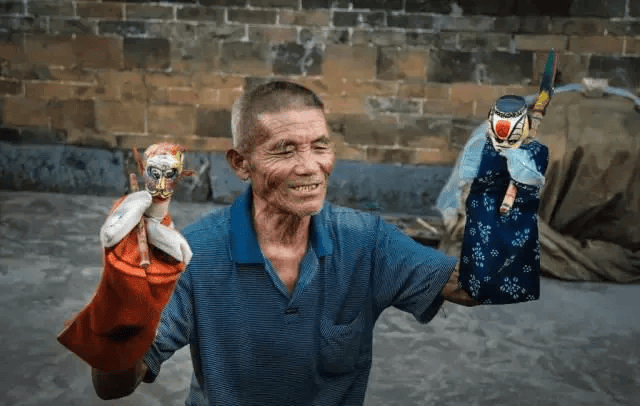
Glove puppetry is also known as “quilt theatre,” “shoulder-pole theatre,” and “finger puppet theatre.” The name “glove puppetry” comes from its distinctive performance method: an artist manipulates puppets and plays musical instruments inside a cloth enclosure approximately four chi high and about 2.4 chi in both length and width. The term “quilt theatre” refers to the makeshift stage, formed by draping a piece of blue-printed cotton quilt fabric around the performance area to create a pouch-like enclosure.
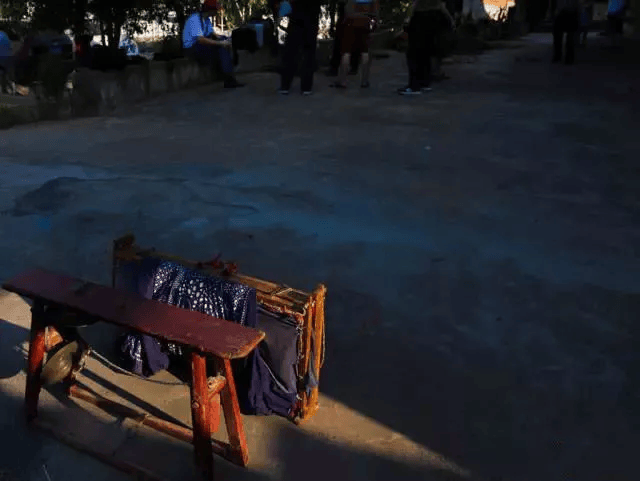
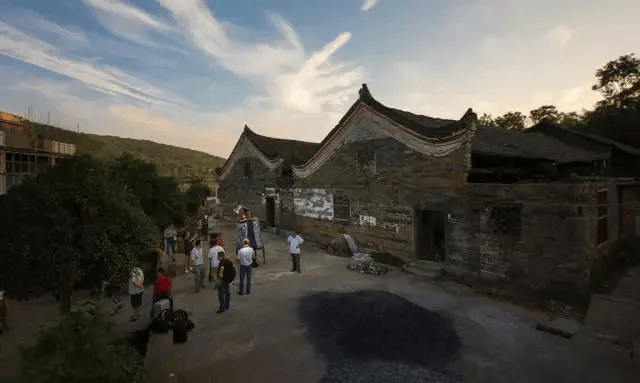
About 15 kilometres south of Shaoyang City, in a small village called Yanwoling in Shaoyang County, more than a hundred households share the surname Liu. For generations, they have preserved the ancient art of glove puppetry, which local tradition traces back to 1633, the sixth year of the Chongzhen reign of the Ming Dynasty.
Liu Yongzhang, a veteran performer, is the 18th-generation inheritor of Shaoyang glove puppetry and one of the designated inheritors of this nationally recognised intangible cultural heritage.
According to the Liu family genealogy, during the late Yuan and early Ming dynasties, the family’s ancestors fled warfare by carrying a glove-puppetry performance set on a shoulder pole. Accompanied by their wives and children, they travelled from Ji’an in Jiangxi Province to the remote, densely forested village of Yanwoling, where they eventually settled.
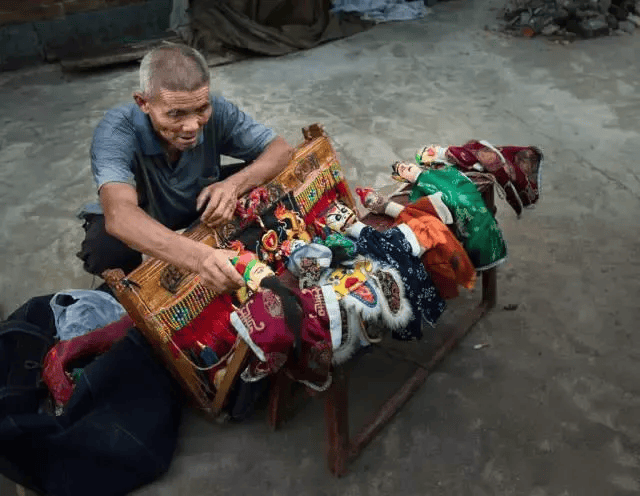
With simple equipment and humorous, entertaining performances, glove puppetry quickly won the affection of local audiences and provided a relatively good livelihood. The Liu family came to depend on this art for generations and established a family rule: the secret of “one person performing an entire play” must be passed down from one generation to the next. According to family tradition, this legacy has continued for more than 600 years.
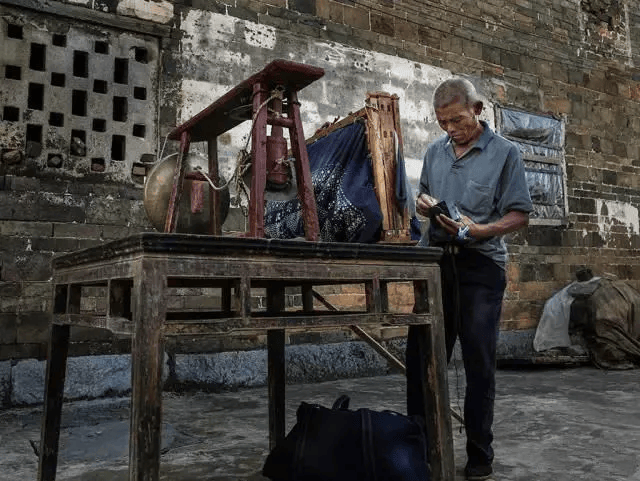
At its peak, Yanwoling had more than 110 glove-puppetry performance sets travelling across China, from Yunnan and Guizhou to Hunguang—the historical region covering much of present-day Hunan and Hubei—and as far as Zhejiang.
During the agricultural off-season each year, Liu family members, young and old, men and women alike, would shoulder their performance equipment and travel far from home to earn a living through their art. Glove puppetry became their principal source of income.
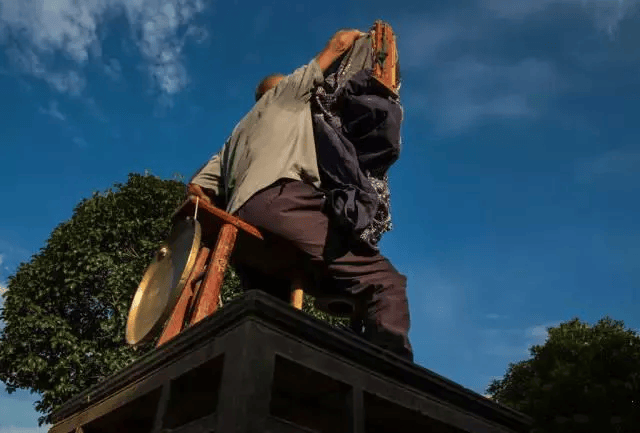
Liu Yong’an recalls that he began travelling with his father to perform at the age of 15, after graduating from junior middle school. Every year, they set out after the Double Ninth Festival and did not return home until after the Qingming Festival the following spring. Throughout the farming off-season, he helped his father carry the performance equipment from village to village, performing wherever they went.
A table and a small portable loudspeaker were all they needed to set up a stage.
Year after year, day after day, Liu Yong’an followed his father on the road, performing across six provinces: Hunan, Guizhou, Guangxi, Guangdong, Jiangxi, and Zhejiang.
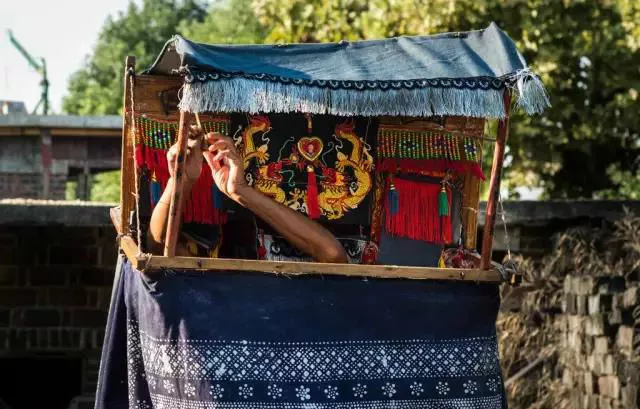
Remaining faithful to his roots, Liu Yong’an has continued to encourage younger generations to preserve the tradition. Even today, performers still travel from village to village with their equipment carried on a single shoulder pole, bringing live performances to local residents. Over time, they have won a loyal following, and Shaoyang glove puppetry has become increasingly well known throughout Shaoyang County.
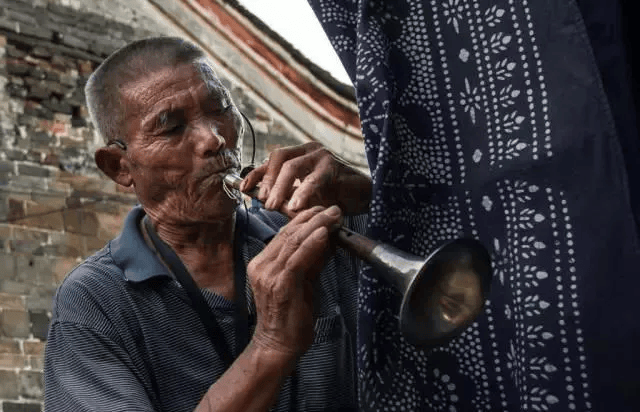
The stage is enclosed by a piece of blue-printed quilt fabric. The gongs and drums resound, and the singing begins. Scenes of warfare unfold, with armies clashing and horses thundering across imaginary battlefields. Remarkably, all this excitement and drama emerges from the nimble fingers of a single performer.
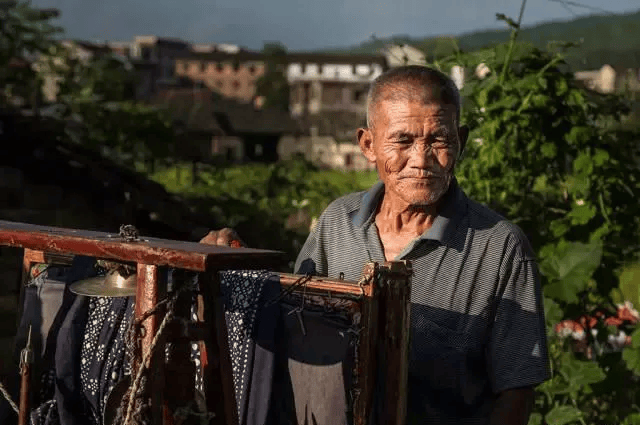
The traditional repertoire includes Fengshen Bang(The Investiture of the Gods), Romance of the Three Kingdoms, Journey to the West, and Yang Xiao Fights the Tiger. Martial arts dramas, supernatural tales, and comedies are especially popular. The music is based primarily on Qiju Opera singing, with a fresh, rustic, and unpretentious character that gives the art form its own distinctive style.
Since 2003, the Shaoyang municipal government has allocated special funds to rescue and preserve glove puppetry and support its inheritors. A production team from China Central Television’s opera channel also travelled to Shaoyang to make a documentary showcasing this unique theatrical tradition.
In May 2006, Shaoyang glove puppetry was included in the first batch of China’s national-level intangible cultural heritage list, announced by the State Council of the People’s Republic of China. Since then, increasing numbers of people have come to appreciate this distinctive folk art, a living expression of Shaoyang’s local culture and enduring traditions.