Podcast Episode: Autumn Views At Mount Langshan
Pip: Mount Langshan — World Natural Heritage site, Danxia cliffs, sea of clouds, and apparently a very busy autumn. sunpow has been filing dispatches from the mountain, and there is a lot going on.
Mara: There is. We’re looking at a National Day tourism surge, a surprisingly thoughtful photo-services rollout, and a lotus pond at the foot of Camel Peak that is pulling in weekend crowds. Let’s start with the holiday numbers.
National Day crowds at Mount Langshan
Pip: The National Day holiday is the stress test every scenic area dreads — the question being whether Langshan handled the surge or got swamped by it.
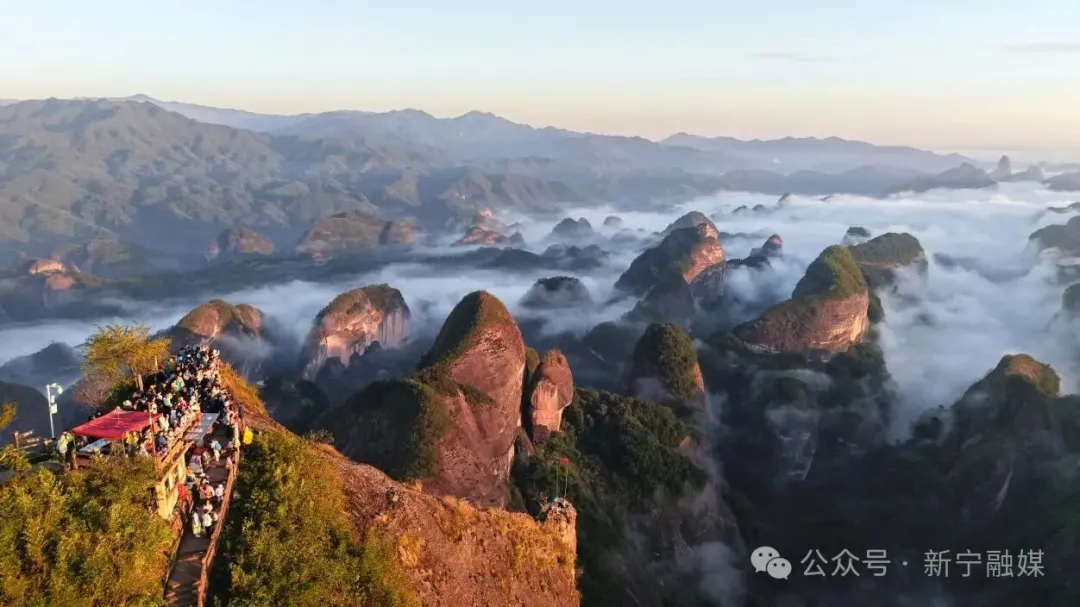
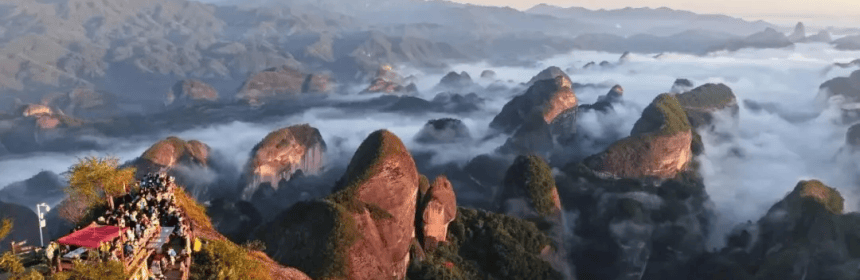
Mara: The post on the holiday period opens with the scene at Bajiao Stronghold: “the jagged Danxia peaks are instantly lit up, and the sea-of-clouds among the mountains glows with golden radiance. Crowds of visitors gather atop the mountain waiting for the sunrise.”
Pip: So the draw is real — people are setting alarms to catch first light on Danxia stone.
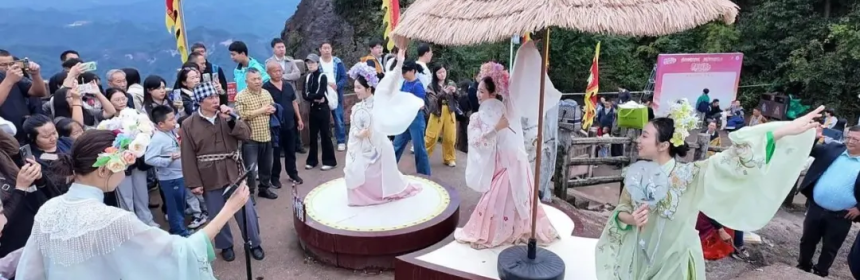
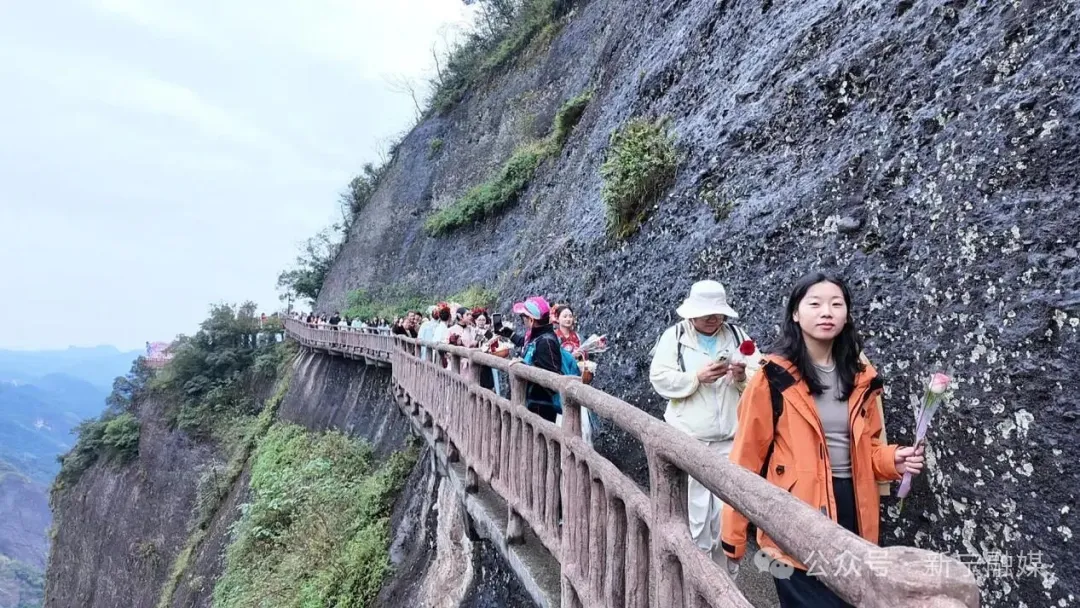
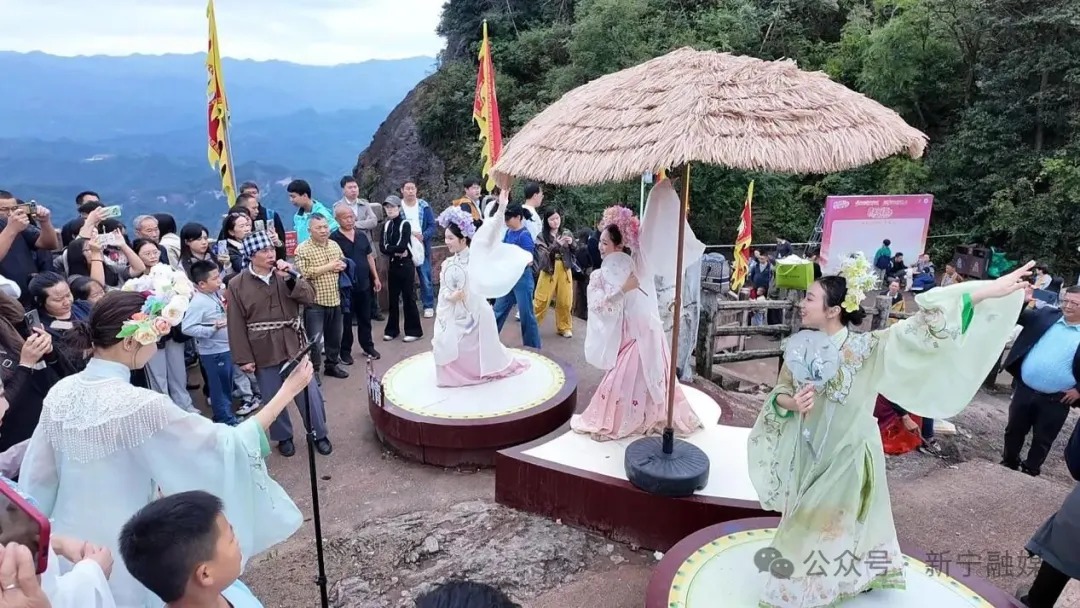
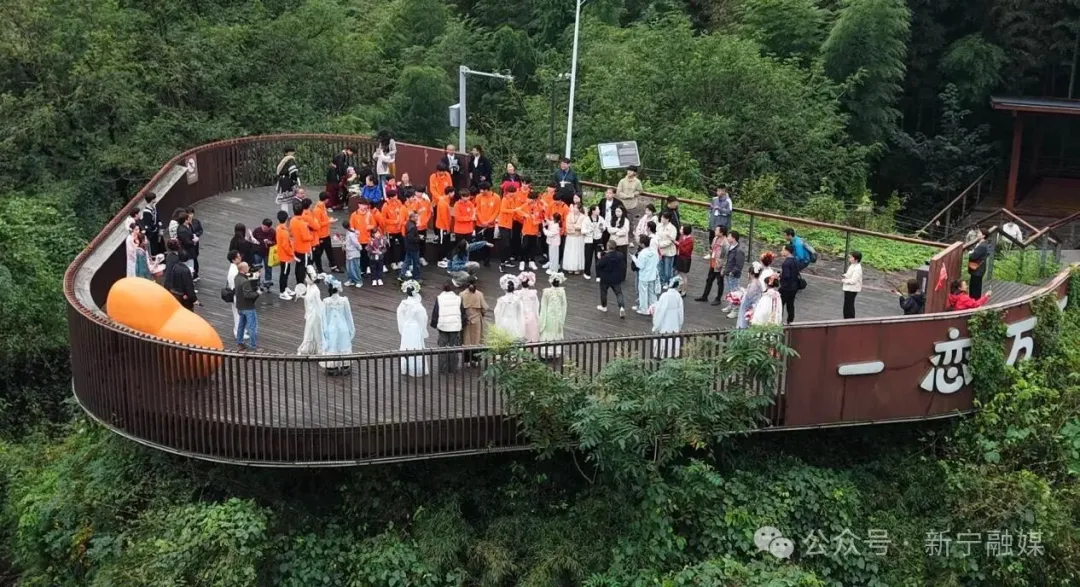
Mara: And they came in volume. The holiday report puts the total at 207,200 tourists received across the break, with Bajiao Stronghold, Tanyi Lane, Chili Peak, and Fuyi River all named as core draws. The area ran Hanfu parades, Han-ritual demonstrations, woodblock-print workshops, and Flower-Drum Opera shows alongside the scenery.
Pip: Cultural programming stacked on top of a World Heritage landscape — not a bad hedge against a rainy day.
Mara: Passenger-flow management, safety patrols, and on-site volunteers were all credited with keeping things orderly. The piece quotes Party Secretary Xiao Haibin saying Langshan will “continuously upgrade services and enrich cultural-tourism formats” off the back of the holiday experience.
Pip: Which brings up the question of what those upgraded services actually look like on the ground.
Photography for every visitor
Mara: That’s exactly what the photography-services post addresses. The setup is a small scene: two children at the instant-photo counter near the Camel Peak exit, and the line is simply “We found our photos!”
Pip: A two-word exclamation that apparently represents a whole service philosophy.
Mara: It does. The post frames the entire system as a response to a real pain point — elderly visitors and photography beginners struggling to get usable shots of a landscape this dramatic. The Camel Peak spot offers free two-inch instant prints on the spot, or framed seven-inch photos at twenty-five yuan with a high-definition digital copy included.
Pip: Twenty-five yuan for a framed shot of a Danxia cliff with a complimentary digital file. That is not a bad deal.
Mara: The system goes further than one counter, though. On Langhu Street at Qin Bridge, the Xinning County Photographers’ Association runs a traditional-style shoot with Hanfu and period costumes — visitors can photograph against the river and the Danxia backdrop in ancient-style dress. And at Bajiao Stronghold’s main-peak platform, there is a dedicated angle built specifically to capture what the post calls “Whales Paddling in the Sea of Clouds,” where rolling ridges in the cloud layer resemble a pod of whales.
Pip: The whale framing is doing a lot of work. Name the phenomenon correctly and suddenly everyone needs that shot.
Mara: The post describes the full system as covering three distinct nodes: instant souvenir photos at Camel Peak, traditional-style shoots on Langhu Street, and dedicated landscape photography at Bajiao Stronghold — designed, as the post puts it, so “visitors of all groups” can engage with the scenery without needing their own gear or expertise.
Pip: And the autumn scenery those photos are capturing is itself worth a segment.
Autumn lotus at the foot of Camel Peak
Pip: The lotus post makes the case that late autumn at Langshan is its own distinct draw — not a consolation prize after summer, but a scene worth planning around.
Mara: The post quotes a classical poem to set the tone: “When September comes, blooms fade in regions south of the Yangtze; Lotus still gracefully blooms on the islet in the lake. No need to grieve for flowers blooming late; This pond holds a serene charm of its own.”
Pip: Ancient poetry as tourism copy. It actually works here.
Mara: The pond sits at the foot of Camel Peak in Shitian Village, and the post describes hundreds of mu of lotus — pink and white blooms set against red Danxia cliffs and white-walled, black-tiled houses. A tourist named Li Yanmei is quoted saying the air is filled with lotus fragrance and the views of the mountain are spectacular. Nearby farm restaurants are pulling in visitors too, with lotus-ingredient dishes alongside Xinning specialties.
Mara: The piece on the first sunrise ray over Bajiao Stronghold captures the same mountain from the other direction — golden light on those same Danxia peaks at dawn, crowds already gathered and phones raised. Together the two posts frame Langshan as a place worth arriving for early and staying through the season.
Pip: Dawn light on Danxia stone, a lotus pond that quotes classical poetry, and a photo counter where children jump for joy. Langshan is building something layered.
Mara: The next episode should tell us whether the off-season holds any of that energy — or whether the mountain saves it all for the holidays.